Factory halogen bulbs are a headache. They cause eye strain during long nights, struggle in dusty conditions, and burn out frequently, leading to costly downtime. Cheap replacements flicker and fade fast on rough terrain.
Upgrading to the best LED work lights for tractors changes everything. It’s not just brighter, it’s safer, more efficient, and built to last. In this guide, we’ll break down key specs like lumens vs. lux, decode beam patterns, and spotlight top picks that turn night into day. Whether you’re running a John Deere, Case IH, or Kubota, you’ll know exactly what to buy for maximum productivity.
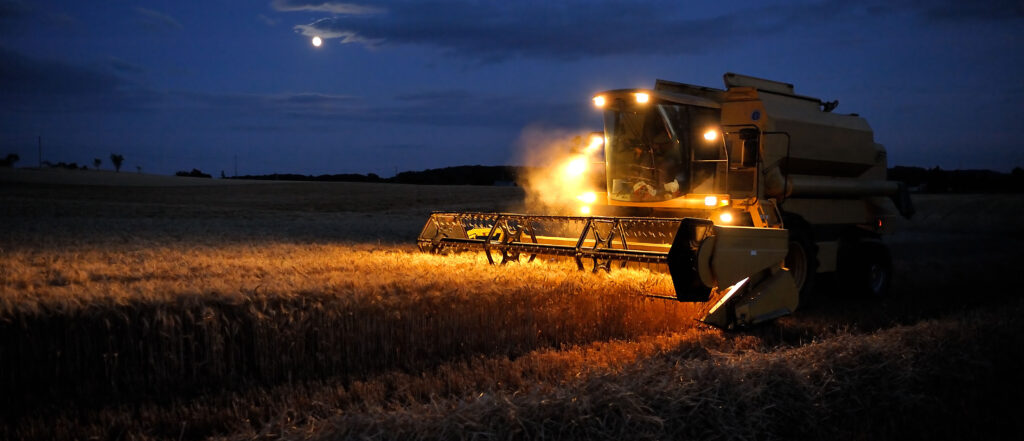
Why Upgrade? The Benefits of LED Tractor Lights Over Halogen
Switching from halogen to LED tractor lights isn’t a luxury—it’s a smart investment for any serious farmer. LEDs deliver unmatched performance in the field where reliability counts. Here’s why they’re worth every penny.
Superior Brightness and Visibility
LEDs produce a crisp, white light around 6000K that mimics daylight far better than the yellowish glow of halogens. This means you can spot obstacles, crops, or equipment issues from much farther away, reducing accidents and improving safety.
Studies show that switching from a 55W halogen bulb (producing about 1,000 lumens) to a 40W LED (delivering 3,000+ effective lumens) can double your visible distance—up to 500 meters in clear conditions. No more squinting through fog or dust; your eyes stay fresh during those grueling 12-hour shifts.
Energy Efficiency and Reduced Alternator Load
Halogen bulbs consume significant power—up to 55W per bulb—straining your tractor’s alternator and battery, especially when running multiple lights simultaneously. LEDs draw just 20-30W for equivalent or superior output, slashing energy consumption by 60-75%.
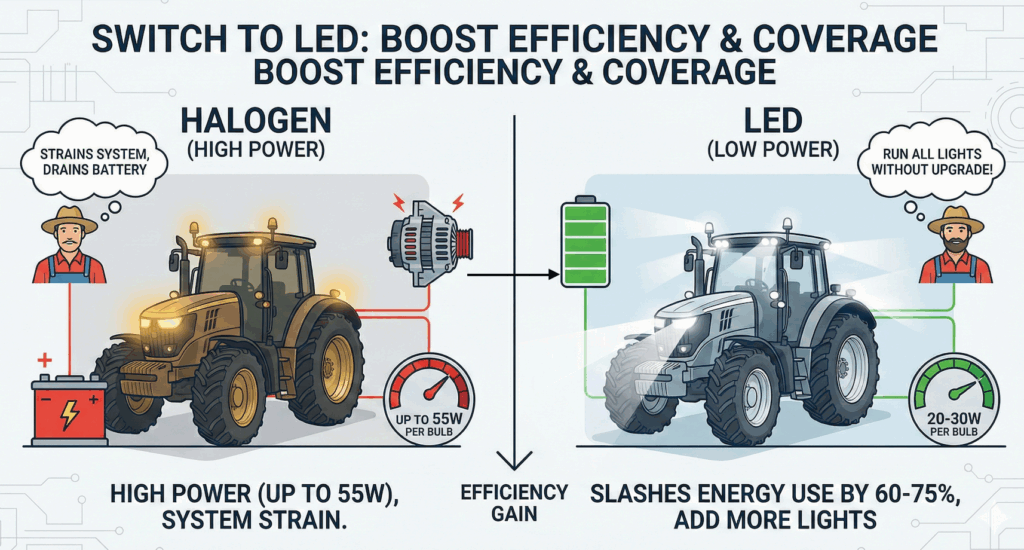
This efficiency means you can add more lights for better coverage without upgrading your electrical system. Imagine running hood lights, rear floods, and cab spots without draining the battery mid-harvest.
Longevity and Durability
Halogen bulbs typically last a mere 1,000 hours before burning out. Quality LED tractor lights achieve 50,000+ hours of operation, thanks to solid-state technology with no fragile filaments to break.
They’re vibration-proof for bumpy field conditions, resisting shocks that would shatter halogen bulbs. One farmer reported his Tough Lighting LEDs surviving three full seasons of plow work without a single replacement.
How to Choose the Best LED Work Lights for Tractors
Selecting the right tractor work lights comes down to matching specifications to your specific tasks. Overwhelmed by lumen claims and beam types? We’ll simplify the process so you can buy with confidence.
Understanding Light Output: Lumens vs. Lux
Raw lumen numbers sound impressive, but “marketing lumens” often inflate figures. Focus on effective lumens—the actual light output after optical losses. A 10,000-lumen LED might deliver only 6,000 usable lumens in real-world conditions.
Lux measures light intensity at a specific distance, such as 100 lux at 50 meters across your field. Aim for 5,000+ lumens per light for tractor applications. Test reports from reputable brands like Tough Lighting confirm real-world output rather than inflated marketing claims.
Beam Patterns: Spot vs. Flood vs. Combo
- Flood Beams (40°-90°): Perfect for wide-area work like headers or sprayers. They illuminate 20-30 meters of close-range area without creating shadows.
- Spot Beams (10°-30°): Narrow, focused beams ideal for distance work—perfect for checking rows or fence lines up to 100+ meters away.
- Combo Beams: Combine both patterns for versatile driving conditions. Most best LED work lights for tractors use this configuration.
- Scene/Diffusion: Provide soft, even lighting for engine bays or close maintenance work.
Match beam patterns to your setup: floods for rear work, spots for forward visibility.
Color Temperature Matters
Stick to 5000K-6000K for agricultural work—this range penetrates dust effectively without creating glare. Avoid 6500K+ blue-tinted lights; they scatter in fog and actually worsen visibility. Tough Lighting’s 5700K options strike the perfect balance between penetration and clarity.
Durability Factors: What Makes a Light “Farm-Ready”?
Farm life is brutal on equipment—mud, high-pressure water jets, flying stones. The best LED work lights for tractors withstand these challenges with industrial-grade construction. Here’s what separates tough from trash.
IP Ratings Explained (IP67, IP68, IP69K)
IP67 means dust-tight and able to survive 1-meter submersion for 30 minutes. IP68 handles deeper water immersion. IP69K is the gold standard—it withstands 80°C high-pressure water jets at 14,500 PSI, perfect for post-work tractor washing.
Cheap IP65 lights fail under these conditions. Farm professionals demand IP69K protection for long-term reliability.
Thermal Management and Housing
Overheating kills LEDs prematurely. Look for oversized aluminum heat sinks that dissipate heat passively—no fans to clog with dust or fail mechanically.
Polycarbonate lenses outperform glass: they’re virtually shatterproof against flying debris. Tough Lighting’s housings use die-cast aluminum for maximum impact resistance while maintaining excellent heat dissipation.
EMC/RFI Interference Protection
Budget LEDs often create radio interference, causing static in your tractor radio or glitches in GPS auto-steer systems. Premium lights meet CISPR 25 Class 3-5 standards, effectively blocking electromagnetic interference. Test this: if there’s no static on AM/FM radio when lights are on, they’re properly shielded and farm-ready.
Top Recommendations: Best LED Work Lights for Specific Applications
Ready for specific recommendations? We’ve vetted options for real tractor applications, focusing on plug-and-play solutions from Tough Lighting. These are the best LED work lights for tractors in 2024.
Best for Forward Lighting (Headlights & Hood Lights)
Combo or spot beams excel for forward visibility. Tough Lighting’s 4×6″ LED headlights (5,000 lumens, IP69K rated) replace halogen units with plug-and-play installation, dramatically boosting both road and field visibility.
PAR36 mounts fit older tractor models—drawing only 20W while delivering 50,000-hour lifespan.
Best for Rear and Implement Lighting
Wide flood beams dominate rear applications. Tough Lighting 10″ light bars (8,000 lumens, 90° beam pattern) evenly illuminate plows or balers, eliminating hot spots and shadows.
Pair two bars for sprayer booms—ensuring complete coverage with no shadows on nozzles.
Best Plug-and-Play Kits for Major Brands
John Deere Upgrades
Oval 6×4″ and round hood kits drop directly into 5/6/7/8R series tractors. John Deere LED Kits include all necessary wiring—complete installation in 30 minutes or less.
Case IH and Kubota Upgrades
Case IH Magnum/Puma models accommodate 7″ flood lights perfectly, while Kubota M-series tractors work beautifully with PAR46 spot beams. Tough Lighting’s ODM kits match OEM mounting points precisely—always check compatibility charts before ordering.
Installation Tips for Tractor LED Upgrades
Upgrading shouldn’t require professional help. Follow these steps for professional results without electrician fees.
Plug-and-Play vs. Universal Wiring
Vehicle-specific kits like Tough Lighting’s save hours of installation time—no wire splicing required. Simply unplug the halogen light and plug in the LED replacement.
For vintage tractors without modern connectors, universal harnesses with Deutsch connectors provide reliable connections. Always protect circuits with proper 15A fusing.
Mounting and Positioning for Maximum Coverage
Angle forward lights 15° downward to prevent hood glare from reflecting into your eyes. Mount rear floods pointing straight back, and position side spots at 45° outward angles for optimal side coverage.
Safety tip: Dim or aim lights appropriately near roadsides to avoid blinding oncoming traffic. Use adjustable brackets for fine-tuning beam direction after initial installation.
Frequently Asked Questions (FAQ)
1. Will LED lights drain my tractor battery?
No, LED lights draw 50-75% less power than equivalent halogen bulbs, actually reducing load on your alternator and extending battery life.
2. Do these lights interfere with my tractor radio or GPS?
High-quality lights like Tough Lighting’s include EMC protection to prevent radio interference. Avoid unrated budget options that commonly cause static and GPS glitches.
3. Are curved light bars better for tractors than straight bars?
Curved bars provide slightly wider peripheral coverage, but standard flood beams on straight bars suffice for most agricultural tasks. Choose curved only for extreme width requirements.
4. What’s the practical difference between IP67 and IP69K ratings?
IP67 handles dust and temporary water submersion. IP69K withstands high-pressure, high-temperature steam cleaning—essential for farm equipment that gets thoroughly washed regularly.
Conclusion
The best LED work lights for tractors combine high effective lumens, smart beam patterns, and IP69K-rated toughness. Ditch those old halogens for lights that match the demands of modern farming—brighter fields, fewer breakdowns, and safer nighttime operations.
Don’t let darkness limit your productivity. Upgrading to quality LED work lights pays dividends in both efficiency and peace of mind during critical farming windows.
Ready to illuminate your fleet? Browse Tough Lighting’s heavy-duty, plug-and-play LED tractor lights today and find the perfect fit for your machine.