
LED Work Lights for Mining Equipment
Mining equipment lights for haul truck, loader and drill rig OEMs: 12 to 580 W on one 9–32 V DC range, tested to your vibration profile, with ECE R10 approval on four round work lamp models. Not for explosive atmospheres.

A haul truck on a night shift runs for hours between the shovel and the dump, taking the shock of every loaded pass while dust hangs in its own lights. When it comes in, it goes through the wash bay and back out. This page is written for the people who specify lighting on mining machines: engineers at haul truck, loader, drill rig and dozer builders, and the maintenance teams who standardise the spec across a site.
The short version: one 9–32 V DC range from 12 to 580 W, sealing from IP67 to IP69K with potted drivers, confirmed per model, vibration run on our own table to your profile, and four round work lamp models with ECE R10 approval. These lights are for surface mining and non-hazardous areas; they are not approved for explosive atmospheres.
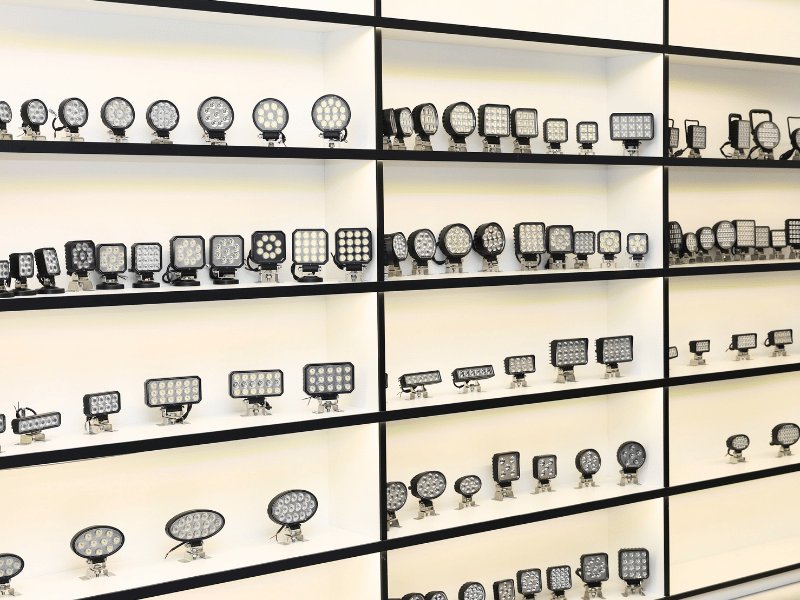
Common Challenges in Mining Equipment
Every loaded pass is a shock test
Haul roads, loading passes and drilling shake a lamp all shift, and a weak bracket or an unpotted driver fails first.
Dust in the air, water in the wash bay
Fine dust coats the lens during the shift and the wash bay drives water at every joint afterwards.
A dark machine is a stopped machine
A lamp that fails on shift parks the machine until the next maintenance window, so service life and one spares list matter as much as output.
What mining OEMs ask about first
In the order the questions usually arrive: will the lamp survive the vibration and shock of a haul truck or a drill, will it survive dust and the wash bay, can the operator judge the face and the edge without glare, will it hold its output when it never switches off, and what does a failure cost in downtime. Documentation closes the list, together with the question every mining buyer asks early: what the lights are approved for.
Send the spec sheet and we mark our status against every line
Vibration profile, IP rating, supply voltage, connector, certifications: you get a line-by-line answer, and a test report per model where one exists.
Get RecommendationsReply within 24 hours
| Requirement | What the specification usually calls for | Tough Lighting status |
|---|---|---|
| Vibration and shock | Profile from haul roads, loading passes and drilling, set by the OEM | Run on our in-house vibration table to your profile; report per model on request; stainless-steel brackets, with 304 recommended as the minimum and 316 where water or salt is present |
| Dust and washdown | Sealed against fine dust and daily high-pressure washing | Sealing from IP67 to IP69K with potted drivers, confirmed per model; dust chamber in house |
| Seeing the face and the edge without glare | Even floods over the load area and bench, cut-off where the beam meets other machine operators, a white that shows the ground as it is | Flood and spot across the range; cut-off optics developed to your specification; colour temperature to order |
| Continuous duty and heat | Output held through shifts where the lights never switch off | Die-cast housings sized for the output of each model; thermal shock chamber in house; operating temperature range confirmed per model |
| Supply voltage and downtime | 24 V haul trucks and 12 V light vehicles on one spares list; replacement inside planned maintenance | 9–32 V DC across the work lamp range; bracket and connector to your drawing, so one replacement fits several machine types |
| Warranty | Years of three-shift service | 5-year warranty on the work lamp range |
| Approvals and documentation | EMC next to dispatch radios and proximity detection; hazardous-area approval where the site requires it | Built to CISPR 25, class confirmed per model; four round work lamp models hold ECE R10 approval; not ATEX or IECEx approved, so not for explosive atmospheres |
Lamp positions on mining machines
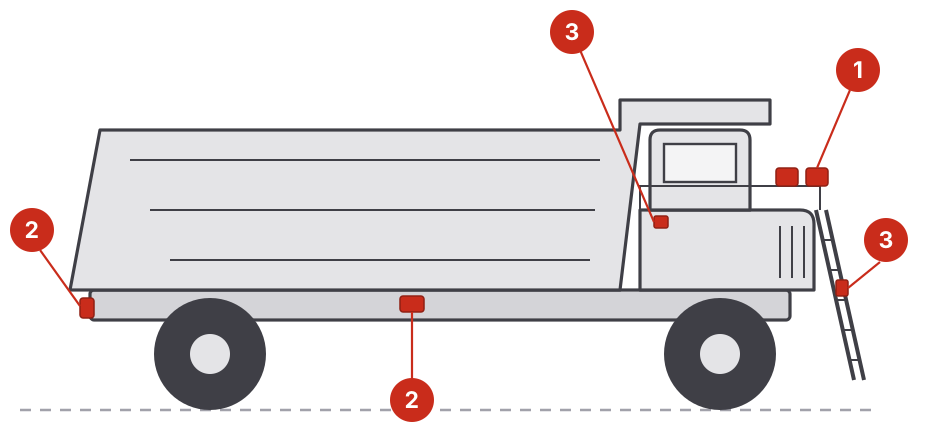
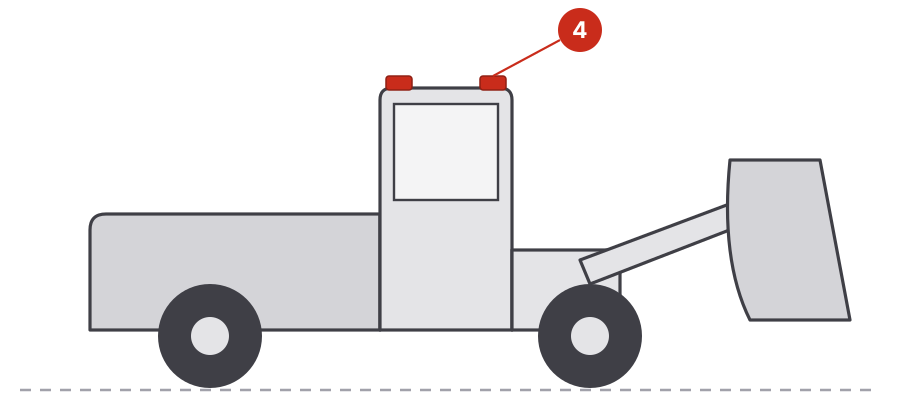
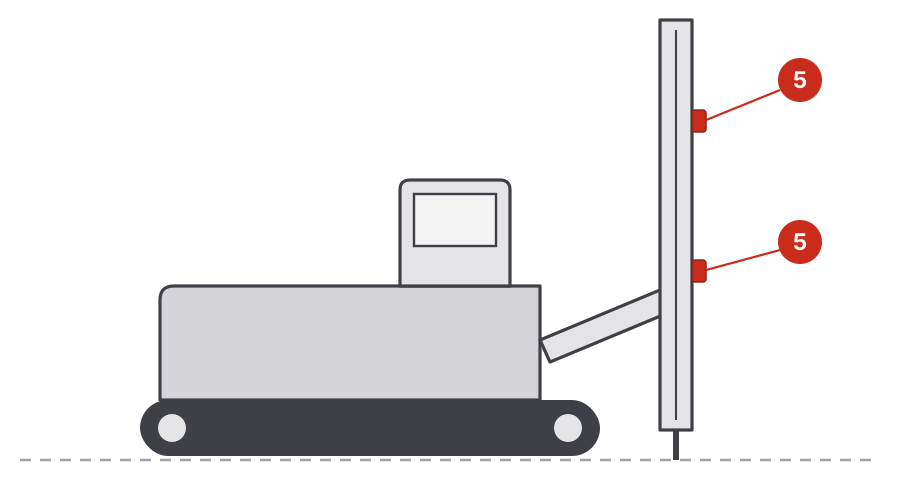
Large machines carry lamps at every corner, and each position asks for a different output. The table pairs each position with models often specified there; the output bands are a starting point for the lighting plan, not a rule. All run on 9–32 V DC.
| Machine and position | Job | Beam and output band | Example models |
|---|---|---|---|
| Haul truck, front deck | The haul road and the dump edge | Flood or spot, 160–580 W | 8.5inch 160W Heavy Duty LED Work Lights13inch 580W Heavy Duty LED Work Lights |
| Haul truck, rear and sides | Reversing path and blind zones | Flood, 90–120 W | 5inch 90W Osram LED Work Light6inch 120W Osram LED Work Light |
| Haul truck, ladders and service points | Access, grease points and checks at shift change | Flood, 12–50 W | 3.5inch 12W Rectangle LED Work Lights3.4inch 50W Osram LED Work Light |
| Wheel loader and LHD | The bucket and the loading point | Flood, 60–120 W | 4inch 60W Osram LED Work Light7inch 120W Heavy Duty LED Work Lights |
| Drill rig, mast | The drill string and the collar | Flood, 50–90 W | 3.5inch Round 50W LED Work Lamp5inch Round 90W LED Work Lamp |
| Whole-area lighting | Loading areas and workshops at night | Flood, 290–580 W | 12.5inch 290W Heavy Duty LED Work Lights13inch 580W Heavy Duty LED Work Lights |
Vibration profile, IP rating, supply voltage, connector, certifications: you get a line-by-line answer, and a test report per model where one exists.
Match lamps to my machineRecommended Products for Mining Equipment


Not seeing your lamp position or output band? Send the drawing, or a photo and the machine model, and we shortlist models for each position.
Get RecommendationsHow an OEM programme runs
There are two routes, depending on whether your drawing calls for a lamp we already build or a new part.
Catalogue and private label. Any of the 300-plus lights in the catalogue can be supplied under your brand from 60 pieces per model, with your logo, packaging, connector and cable length. Samples of stock and private-label lamps ship first, typically within 1 to 5 days, and production runs in 15 to 25 working days.
Custom development. Where the mounting position, beam or housing is new, we develop the lamp to your requirement: design in 7 to 15 days, a 3D-printed prototype in 5 to 7 working days, production tooling in 30 to 45 days and pre-production samples in 7 to 10 working days, with the first bulk shipment four to five months from design start. Tooling is shared and amortised into the unit price, or funded by you for a lower unit cost, and products developed for you can be covered by an exclusivity agreement.
Send the drawing, or a photo and the machine model, and our engineers will come back within 24 hours with a feasibility assessment and next steps.
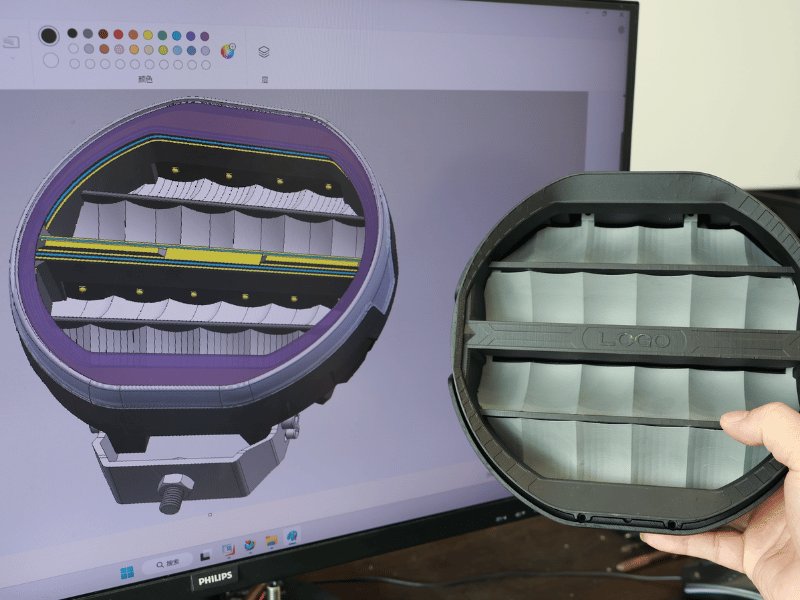
Testing we do in house
The equipment behind the status table sits in our own factory, which is what lets us answer a specification line with a report rather than a promise.
Vibration table for broadband random profiles, run to the profile on your drawing: the haul road and the loading pass set the profile on a haul truck, and the report follows it.
Thermal shock chamber, salt spray chamber and dust chamber for the environmental lines, so dust and the wash bay are answered by a test rather than a claim.
Photometric darkroom for beam pattern and intensity, so the flood, spot or cut-off on the drawing is measured rather than assumed.
EMC anechoic chamber for radiated emissions to CISPR 25, which matters next to dispatch radios and proximity detection; we confirm the class per model in the documentation pack. The drivers are potted, so vibration and moisture have nothing to work on inside the housing.
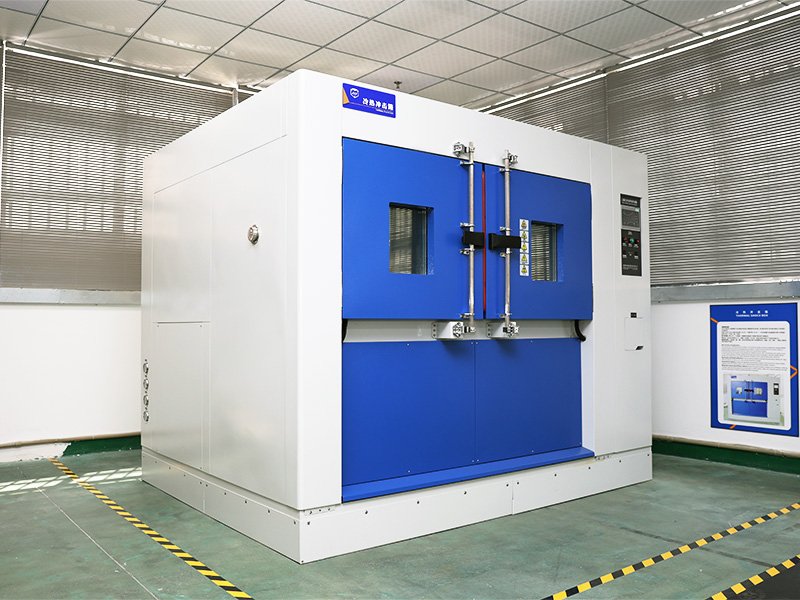
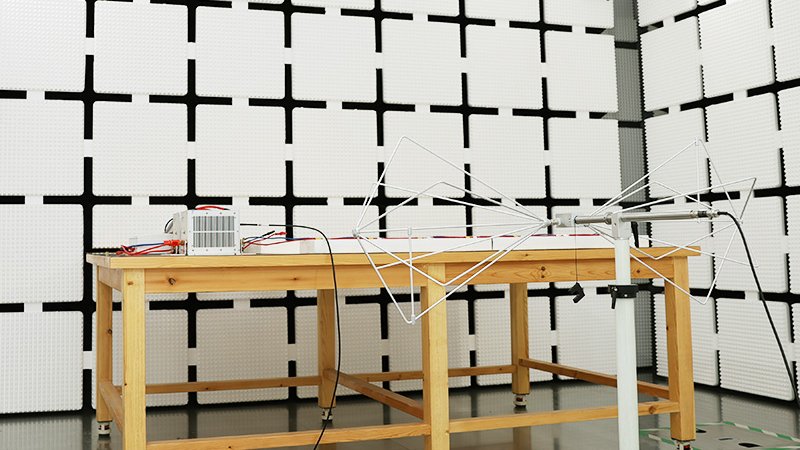
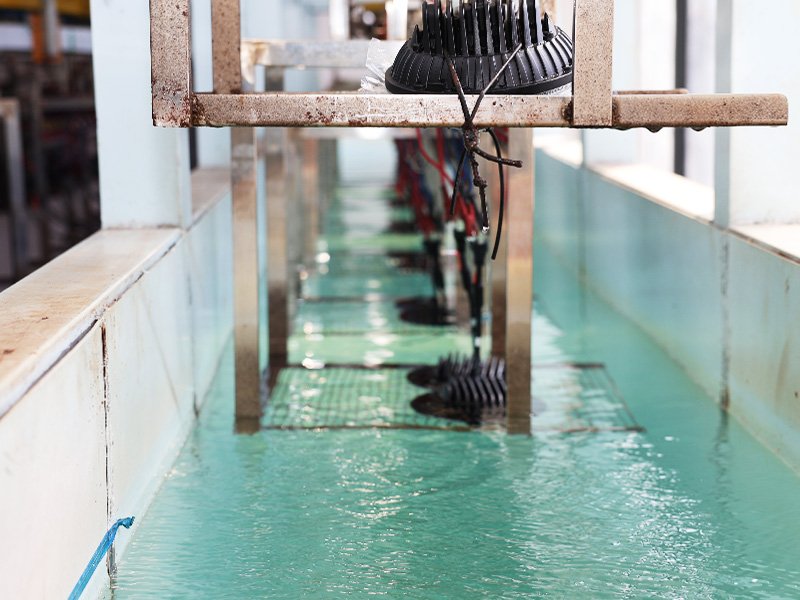
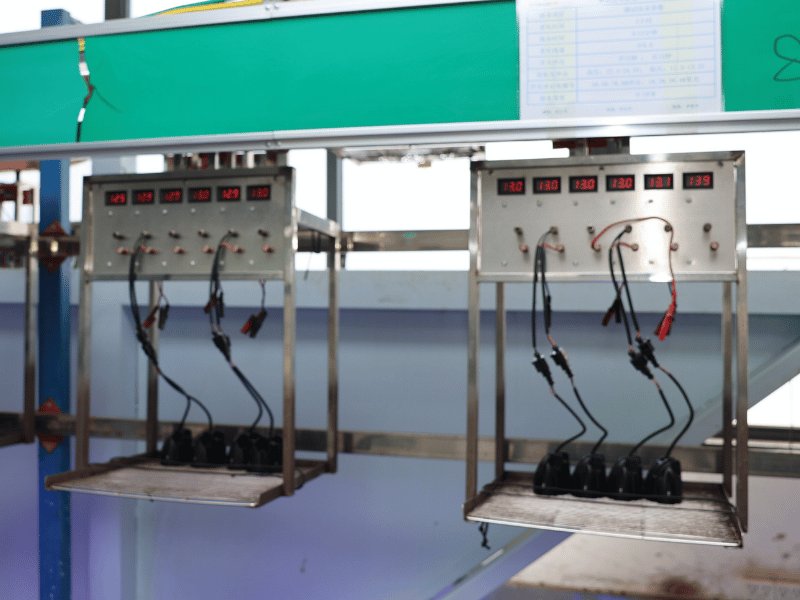
Need the test report for a model? Existing reports are sent on request; where none exists yet, we can run the test to the profile on your drawing.
Request test reportsWant to See the Full Range?
330+ LED lights with full specifications, organised by category, sent straight to your inbox.
Frequently Asked Questions
Are your lights ATEX or IECEx approved for underground use?
No. Our lights do not carry ATEX or IECEx approval, so they are not for areas classified as explosive atmospheres. They are for surface mining and for underground areas that the site classifies as non-hazardous.
How do you keep high-output lamps from dazzling other operators?
By choosing the beam for each position rather than the brightest lamp. Floods go on the load area and the rear, spots only where a job needs reach, and cut-off optics can be developed to your specification where the beam meets other machine operators. We measure the beam of each model in our own photometric darkroom, so the pattern on the drawing is checked rather than assumed.
Are these suitable for haul trucks?
Yes. The high-output models from 160 to 580 W cover the front deck, 90–120 W floods cover the rear and sides, and compact lamps cover ladders and service points. We run the vibration profile of your truck on our own table and issue the report per model.
Can LED work lamps replace the halogen lamps on an existing haul truck?
For the work-lamp positions, yes: we build the lamp to the mounting face, bracket and connector of the original position from your drawing, on 9–32 V DC so one part covers 24 V trucks and 12 V light vehicles. Road headlamps are a different product with their own approval requirements and are outside this range; the ECE R10 approval on four round work lamp models covers electromagnetic compatibility, not road beam approval.
Will they hold output through long shifts?
Each housing is sized for the output of its model, and we test thermal cycling in house. The operating temperature range is confirmed per model, so the specification can state it rather than assume it.
How should a mining tender compare lumen claims between suppliers?
Compare measured output at the operating temperature, the beam pattern and the lux at the working distance, not the LED maker's raw lumen figure. Ask each supplier for the photometric report of the model being quoted.
Can one part number cover our 24 V trucks and 12 V light vehicles?
Yes. The work lamp range runs on 9–32 V DC, so one part number serves both without a converter.
What is the minimum order and lead time for an OEM programme?
Catalogue and private-label lamps ship from 60 pieces per model in 15 to 25 working days, after samples that typically ship within 1 to 5 days. A custom-developed lamp starts with tooling, and reaches first bulk shipment four to five months from design start.
Talk to our engineering team
We'll match the right product to your exact equipment model and operating environment, free of charge.
Get a Free QuoteReply within 24 hours
Need LED Lights for Mining Equipment?
Tell us your equipment model and operating environment and we'll recommend the right solution.