
LED Work Lights for Work Trucks & Service Bodies
Work truck lights for upfitters and service-body builders: compartment, step, scene and amber warning lamps on one 9–32 V DC range, sealed from IP67 to IP69K, built to your body drawing.

A service body does its hardest work in the dark: the first call-out before dawn, the last job after dusk, a technician searching a compartment with the engine off or working the crane at the tailboard while traffic passes. This page is written for the people who specify the lighting on those trucks: engineers and buyers at service-body builders and upfitters, and the fleet managers who standardise one lighting spec across pickups and medium-duty chassis.
The short version: one 9–32 V DC range of compact compartment and step lamps, body-side scene floods and amber strobe beacons, low current draw for engine-off work, sealing from IP67 to IP69K with potted drivers, and brackets, connectors and cable lengths built to your body drawing from 60 pieces per model.
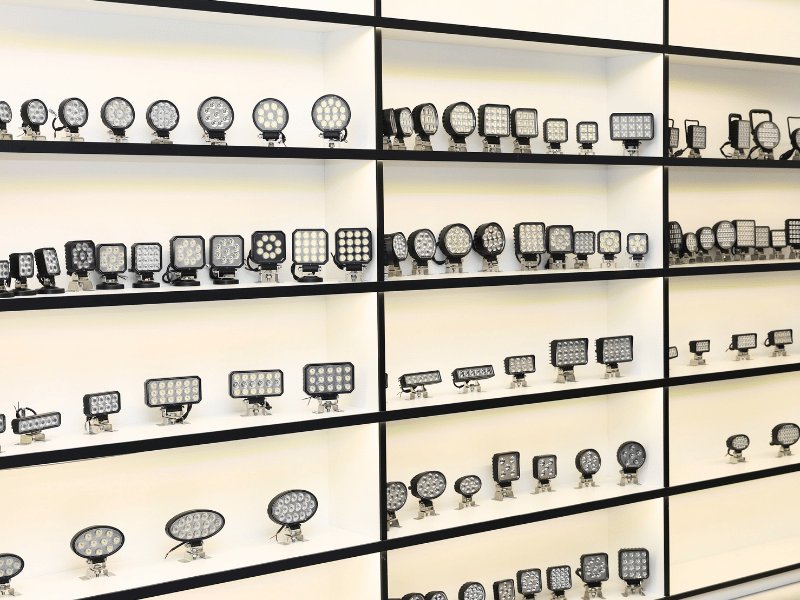
Common Challenges in Work Trucks & Service Bodies
The crew works where the light points
A compartment without light, or a flood aimed into the technician's eyes, costs time on every call before dawn and after dusk.
Engine off, battery on
Crews work with the engine off, so every lamp on the body draws from a battery budget that has to last the job.
The builder answers for what it adds
The company that completes the truck answers for the lamps it fits, so a lamp without test evidence is a risk the builder carries.
What upfitters ask about first
In the order the questions usually arrive: will the crew see the work without being dazzled, can the lamps run with the engine off, will they survive the wash bay, road salt and a running compressor, does one part cover 12 V pickups and 24 V medium-duty chassis, and which warning class does the body need. Documentation comes last in the conversation, but the builder who completes the truck signs for the lamps it adds, which is why we wrote up the five lighting problems the body builder owns.
Send the spec sheet and we mark our status against every line
Vibration profile, IP rating, supply voltage, connector, certifications: you get a line-by-line answer, and a test report per model where one exists.
Get RecommendationsReply within 24 hours
| Requirement | What the specification usually calls for | Tough Lighting status |
|---|---|---|
| Light where the crew works, without glare | Compartments, steps, tailboard and the working perimeter lit; floods aimed so the beam stays out of the crew's eyes | Compact 10–18 W lamps for compartments and steps, 24–60 W floods for the body sides and rear; flood optics as standard, cut-off optics developed to your specification |
| Current draw with the engine off | Lamps that run through a job on the body battery | LED throughout. The listed wattage is the nominal LED power and a lamp typically draws about 80% of it, so the current at 12 V or 24 V and the battery budget can be worked out per position; drive power can be set lower for your programme |
| Washdown, road salt and vibration | Sealed against pressure washing and wheel spray; mounts that take a running generator or compressor | Sealing from IP67 to IP69K with potted drivers, confirmed per model; stainless-steel brackets, with 304 recommended as the minimum and 316 where salt is heavy; vibration run on our own table to your profile, report per model on request |
| Chassis voltage | 12 V pickup chassis and 24 V medium-duty trucks on one part number | 9–32 V DC across the work lamp range; amber strobe beacons in 9–32, 10–48, 10–60 and 10–110 V DC versions |
| Amber warning lamps | SAE J845 for 360-degree beacons or SAE J595 for directional lamps, at the class set by where the truck works | Amber strobe beacons in the range; lamps developed to the standard and class you specify, with samples and test reports to support the certification |
| Mounting, connector and harness | Flush or surface mount on compartment lids and body panels, bracket mount on the headache rack; Deutsch DT or a flying lead to the harness drawing | Flush-mount, surface and bracket versions; connector, cable length and bracket built to your drawing |
| Warranty and service life | Years of fleet service without bulb changes | 5-year warranty on the work lamp range and the amber strobe beacons; sealed solid-state build with no bulb to replace |
| Documentation | Test evidence for the lamps the builder adds; EMC performance next to two-way radios and telematics | Built to CISPR 25, class confirmed per model; ECE R10 approval on four round work lamp models; test reports per model on request |
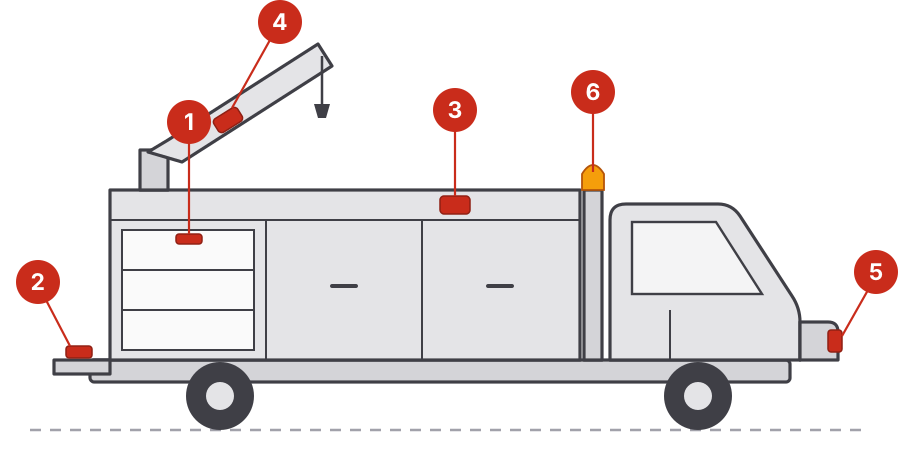
Lamp positions on a service body
A pickup-based service body carries six lighting jobs, and each asks for a different size, beam and output. The table pairs each position with models often specified there. All of them run on 9–32 V DC.
| Position | Job | Beam and output band | Example models |
|---|---|---|---|
| Compartments | Tools and parts inside the boxes | Flood, 10–18 W, flush or compact surface mount | 4.7inch 12W Flush Mount LED Work Lights3inch 12W Square LED Work Lights |
| Steps and tailboard | Footing on the rear step and the work platform | Flood, 12–18 W | 7.5inch 18W Flush Mount LED Work Lights3inch 18W Square LED Work Lights |
| Body sides | The working perimeter around the truck | Wide flood, 24–60 W, mounted high | 5.8inch 24W Rectangle LED Work Lights6inch 60W Rectangle LED Work Lights |
| Rear and crane | Crane work, loading and reversing | Flood, 40–60 W | 4.5inch 40W Square LED Work Lights4.3inch 60W Oval Osram LED Work Lights |
| Forward | The road and the site entrance ahead | Driving beam, 45–60 W | 5inch 45W Round LED Driving Lights5inch 60W Round LED Driving Lights |
| Roof warning | Being seen on the shoulder and in live lanes | Amber strobe beacon | 3-3/4″ Amber LED Strobe Light Beacon5-1/4″ Amber LED Strobe Light Beacon |
Recommended Products for Work Trucks & Service Bodies


Not seeing your lamp position or output band? Send the drawing, or a photo and the machine model, and we shortlist models for each position.
Get RecommendationsHow an upfitter programme runs
There are two routes, depending on whether your drawing calls for a lamp we already build or a new part.
Catalogue and private label. Any of the 300-plus lights in the catalogue can be supplied under your brand from 60 pieces per model, with your logo, packaging, connector and cable length. Samples of stock and private-label lamps ship first, typically within 1 to 5 days, and production runs in 15 to 25 working days.
Custom development. Where the mounting position, beam or housing is new, we develop the lamp to your requirement: design in 7 to 15 days, a 3D-printed prototype in 5 to 7 working days, production tooling in 30 to 45 days and pre-production samples in 7 to 10 working days, with the first bulk shipment four to five months from design start. Tooling is shared and amortised into the unit price, or funded by you for a lower unit cost, and products developed for you can be covered by an exclusivity agreement.
Send the drawing, or a photo and the body model, and our engineers will come back within 24 hours with a feasibility assessment and next steps.
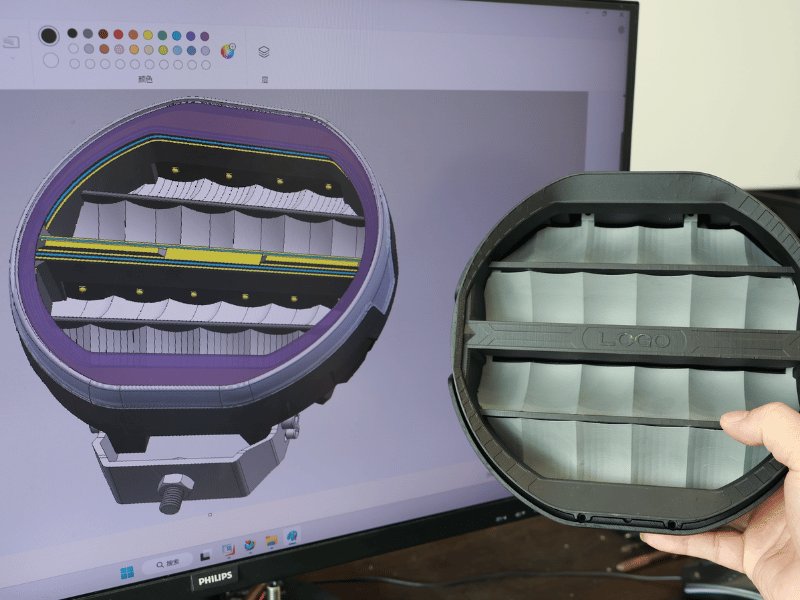
Testing we do in house
The equipment behind the status table sits in our own factory, which is what lets us answer a specification line with a report rather than a promise.
Vibration table for broadband random profiles, run to the profile on your drawing: a compressor or generator running on the body sets the profile, and the report follows it.
Thermal shock chamber, salt spray chamber and dust chamber for the environmental lines, so road salt and wheel spray are answered by a test rather than a claim.
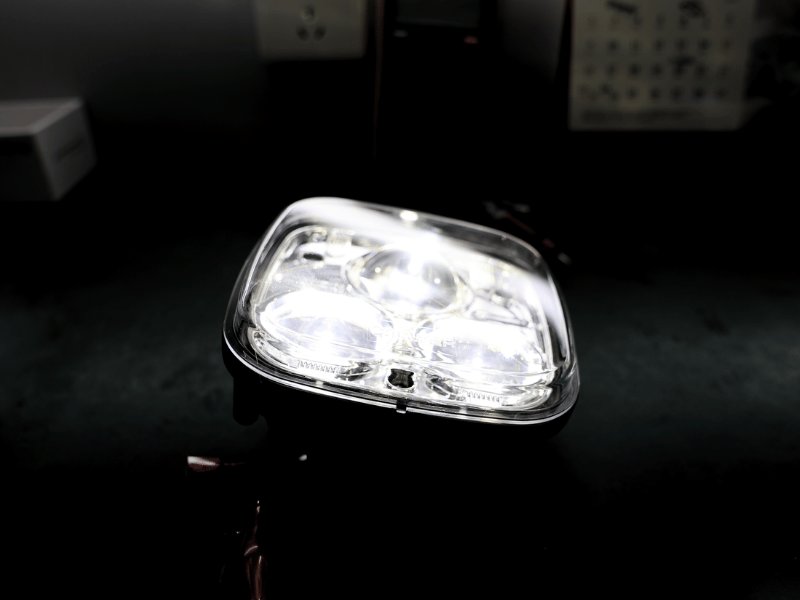
Photometric darkroom for beam pattern and intensity, so the flood or cut-off on the drawing is measured rather than assumed.
EMC anechoic chamber for radiated emissions to CISPR 25, which matters on a body carrying two-way radios, telematics and a crane controller; we confirm the class per model in the documentation pack.
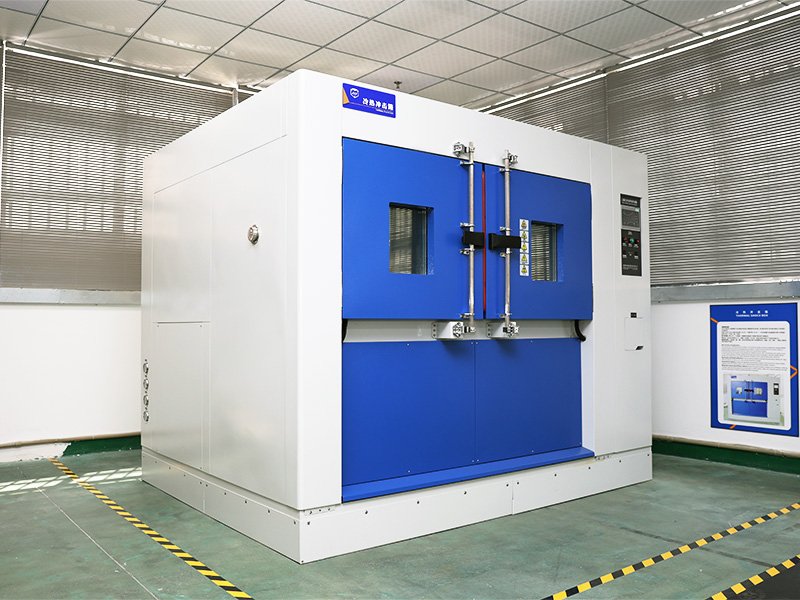
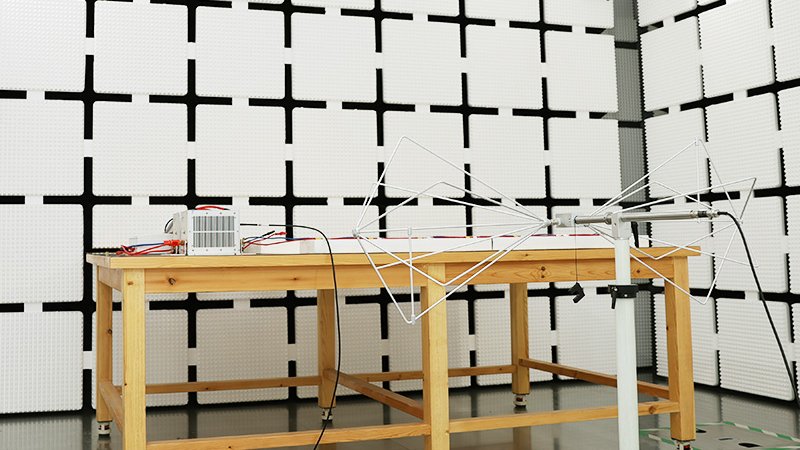
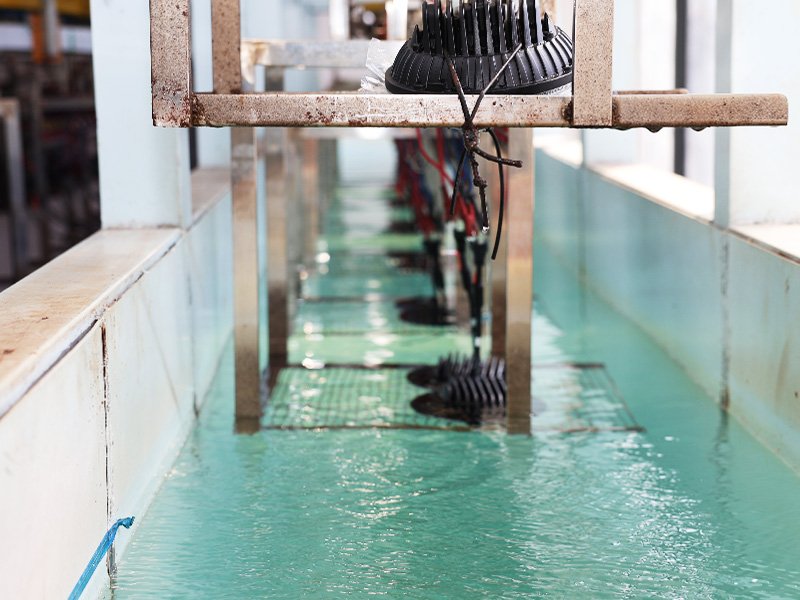
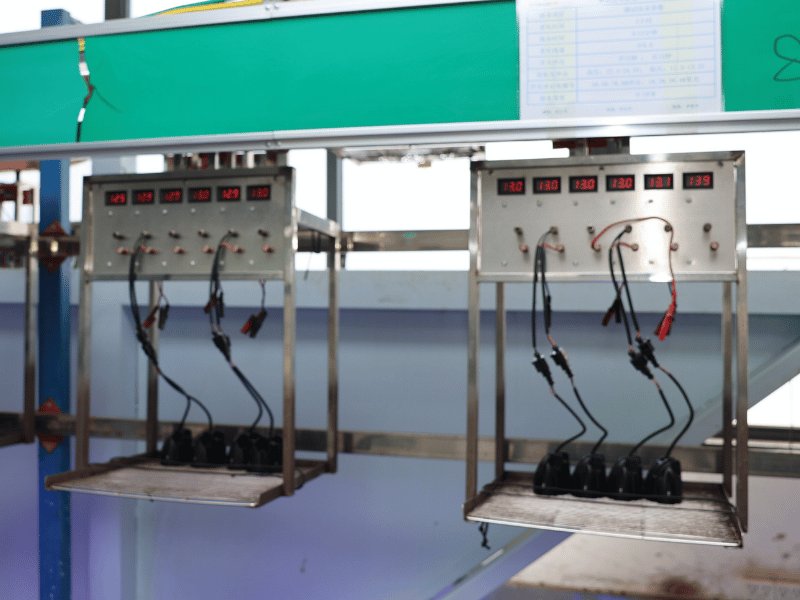
Need the test report for a model? Existing reports are sent on request; where none exists yet, we can run the test to the profile on your drawing.
Request test reportsStandardising lighting across a fleet
Fleet managers rarely buy one truck. Because every work lamp in the range accepts 9–32 V DC and shares the same bracket families, a fleet can standardise a handful of part numbers across pickups, medium-duty chassis and trailers, and keep one spares shelf for all of them. The drivers are potted, so a lamp that has been through years of wash bays and road salt behaves like the one on the new truck.
Want to See the Full Range?
330+ LED lights with full specifications, organised by category, sent straight to your inbox.
Frequently Asked Questions
What are the best LED work lights for trucks?
The best light depends on the position, not the catalogue. Compartments and steps need compact 10–18 W floods that fit a tool-box lid, the body sides need wide 24–60 W floods mounted high, the rear and crane need 40–60 W floods, and the roof needs an amber strobe beacon. Choose a range that runs on 9–32 V DC and is sealed for pressure washing, so one family covers the whole truck.
Can work truck lights run with the engine off?
Yes. LED lamps draw a fraction of the current of halogen. The wattage we list is the nominal LED power and a lamp typically draws about 80% of it, so a 24 W compartment flood takes around 19 W, roughly 1.6 A at 12 V. Add up the positions to size the body battery for the longest job, and if the budget is tight we can set a lower drive power for your programme.
Can one light run on 12 V and 24 V trucks?
Yes. The work lamp range runs on 9–32 V DC, so one part number serves 12 V pickup chassis and 24 V medium-duty trucks without a converter.
Which warning class does a work truck beacon need?
SAE J845 grades 360-degree beacons and SAE J595 grades directional lamps into Class 1, 2 and 3 by intensity. The class depends on where the truck works and on the specification of the fleet or authority buying it, so write it into the lamp specification. We develop warning lamps to the standard and class you specify and support the certification with samples and test reports.
Is 2500 lumens bright enough for a truck work light?
Lumens tell you how much light leaves the lamp, not how much lands on the work. For a body-side flood, ask for the beam pattern and the lux at your working distance, and place the lamp high enough that the light falls on the ground rather than into the crew's eyes.
What is the minimum order and lead time for an upfitter programme?
Catalogue and private-label lamps ship from 60 pieces per model in 15 to 25 working days, after samples that typically ship within 1 to 5 days. A custom-developed lamp starts with tooling, and reaches first bulk shipment four to five months from design start.
Talk to our engineering team
We'll match the right product to your exact equipment model and operating environment, free of charge.
Get a Free QuoteReply within 24 hours
Need LED Lights for Work Trucks & Service Bodies?
Tell us your equipment model and operating environment and we'll recommend the right solution.