


It is five in the morning on a residential collection route. The truck has stopped for the two hundredth time since the start of the shift, the compactor is cycling, and a crew member is standing at the back of the hopper in the dark, with traffic passing a metre away. At the end of the shift the truck will be pressure washed, inside and out, and it will do the same thing again tomorrow.
Nearly every work light on that truck behind the cab was chosen by the company that built the body, not by the company that built the chassis. The same is true of service bodies, tow trucks, snow-removal equipment and aerial lifts. This piece is written for the engineers and buyers at those companies: what goes wrong with lighting on a vocational body, and what to ask a lamp supplier before the first drawing leaves the office.
The short answer: the body builder owns the lighting it adds. Choose a supplier who will develop the lamp to your body and your standard, not one who only hands you a catalogue.
Why the lighting is the body builder's problem
Vehicles built in stages are covered by a specific rule in the United States. Under 49 CFR Part 568, the chassis manufacturer supplies an incomplete vehicle document that lists the federal motor vehicle safety standards that apply, and the final-stage manufacturer normally certifies that the completed vehicle complies with all of them. The rule-making record is plain about what follows: the manufacturer named on the certification label is the one responsible for notifying owners of a safety defect or non-compliance and for fixing it at no charge.
Lighting sits squarely inside that responsibility. A body can hide chassis lamps, move them, or add new lamp positions the chassis never had. Clearance lamps, work lamps on the hopper, scene lights on a service body and amber beacons on the roof are all added at the body stage, by the body builder.
The usual answer is to order from a catalogue. The large lighting brands offer ready-made lamps through distributors, the parts are in stock, and the regulated ones come with the paperwork. For many positions on many trucks that is exactly the right call. The difficulty starts where the body stops being average.
The five problems, in the order builders raise them
| Problem | The usual answer | What to specify instead |
|---|---|---|
| 1. The crew cannot see, or is dazzled | A brighter lamp | Beam pattern and aim per position, with a cut-off where people stand |
| 2. Vibration, washing and corrosion | "Heavy duty" in the catalogue | Sealing rating, potted electronics, bracket material and a test report per model |
| 3. The warning class and the regulated positions | Whatever the distributor stocks | The standard and class the body needs, with test evidence for that class |
| 4. The chassis is someone else's | Adaptors and relays | A voltage range that covers the chassis, the connector on your harness drawing |
| 5. Small volumes, many models | A different part per truck | One part number per position, private label, short sample cycle |
Problem 1: the crew needs the right light, not the most light
The first question on any vocational body is what the crew can see while they work: the hopper and the loading edge, the steps and the rear platform, the ground along the sides of a service body, the load on a tow deck. More light does not solve this on its own. A lamp aimed at the hopper that also shines into the eyes of the crew member standing beside it has made the job harder, not easier.
Specify by position. Name the area the lamp has to light, the beam that suits it (a wide flood for a loading area, a narrower pattern for a deck or a boom) and where people will be standing relative to the lamp. That is the information a supplier needs to choose the beam and the aim, and it is also the point where a catalogue lamp, designed to be acceptable everywhere, can be a compromise at your position. We work from the same position-by-position method on excavators; the logic carries straight over to a body.

Problem 2: vibration, the pressure washer and what they leave behind
A refuse body is close to the worst place on a road vehicle to mount a lamp. The compactor vibrates through the structure all shift, the truck stops and starts hundreds of times, and the body is pressure washed at the end of the day, often with detergent, sometimes against leachate that has sat on the steel for hours. Service and snow-removal bodies add road salt to the list.
Three things decide whether a lamp survives that. The first is sealing to the level the washer demands: our lamps are rated IP67 to IP69K, and IP69K is the rating written for close-range, high-pressure, high-temperature washing. The second is what happens inside: a potted driver is encapsulated so that vibration and moisture have nothing to work on. The third is the part most specifications forget, the bracket and fasteners. We recommend 304 stainless steel as the minimum and 316 where salt is present, because the fixings usually corrode before the lamp does.
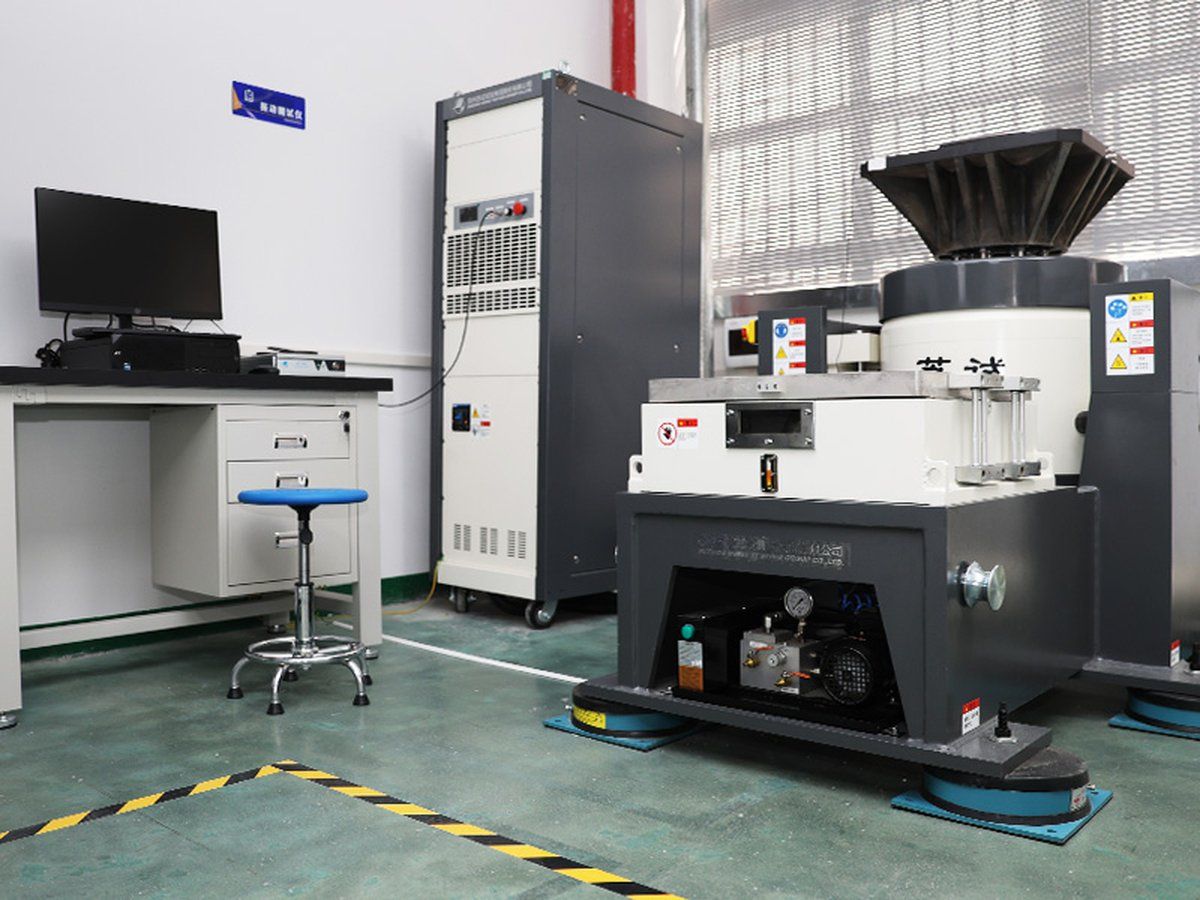
Ask for the vibration and washing tests by model, and ask for them to your body's profile rather than a generic figure. We run these tests in our own facility and issue the report per model on request. Our municipal and refuse vehicle page goes through the washing and corrosion side in more detail.
Problem 3: the warning class, and who stands behind it
Amber warning lamps are graded. In North America, SAE J845 covers 360-degree devices such as beacons and SAE J595 covers directional lamps, and both define classes by intensity: Class 1 for the highest, Class 2 and Class 3 below it. A tow truck working on a highway shoulder and a refuse truck on a private yard do not need the same class, and the class the body needs belongs in the specification, not in the distributor's stock list. Our beacon and warning light range is where most body projects start, and a beacon can be developed to the class your body specifies.
This is also where the body builder's certification responsibility becomes concrete. For regulated lamp positions, the builder needs a lamp with test evidence for the standard that applies, whether that is FMVSS 108 in the United States or the relevant UN ECE regulations in Europe. For many standard positions an off-the-shelf certified lamp is the simplest answer, and we would say so.
Where the body needs something the catalogue does not have (a different housing, a different beam, a lamp that shares a harness with the body's own controls), we develop the lamp to the standard and class you specify and support the certification with samples, test reports and documentation. Four of our round work lamps already hold ECE R10 approval for electromagnetic compatibility, and our range is built to CISPR 25, which matters on a body full of cameras, telematics and control modules.
Problem 4: the chassis belongs to someone else
A body builder mounts the same body on chassis from several manufacturers, and those chassis do not agree on voltage. Light and medium-duty trucks are mostly 12 V, heavy trucks in many markets are 24 V, and a builder serving both ends up stocking two versions of every lamp.
We build our lamps to run on 9–32 V DC, so one lamp works on both 12 V and 24 V systems and a builder can keep one part number per position across the chassis it uses. LED lamps also draw a fraction of the current of halogen, which matters on a body that adds hydraulics, cameras and a compactor to an electrical system sized for the chassis.
The connector is the other half. Tell the supplier what is on your harness drawing, a Deutsch DT connector or a flying lead to a given length, and have the lamp arrive that way, so the line does not cut and splice.
Problem 5: a few hundred lamps per model, many models
A body builder rarely orders in the volumes a chassis plant does. A given body model may need a few hundred to a few thousand lamps a year, across several models, and fleets increasingly ask for one part number per position so their workshops can stock a single spare.
That calls for a supplier whose minimum order and sample cycle fit the volume. Our minimum order is 60 pieces and production lead time is 15–25 working days. Stock and private-label lamps sample in 1–5 days. We make our own tooling in die-casting, injection moulding and bracket hardware, so a housing, a bracket or a private-label lens can be built around your body rather than your body around our lamp. A custom part starts with that tooling, and samples follow once the tool is made, on a schedule we confirm with your specification.
We are equally clear about what we do not make. We do not currently produce licence plate lamps, side repeaters or red reflex reflectors, and a builder who needs those will get a better answer from a specialist than from us.
What to put in the supplier brief
The brief that gets a lamp accepted on a vocational body is short. For each lamp position it names six things, and the table below is a template you can copy.
| Item | What to state | Example |
|---|---|---|
| Position and area | The area to be lit and where people stand relative to the lamp | Hopper loading edge, crew at the rear step |
| Beam and output | The beam pattern and the output band | Wide flood with a cut-off towards the crew |
| Mounting | The mounting face and the bracket material | Flat face on the hopper wall, 316 stainless steel bracket |
| Electrics | The chassis voltage range and the connector on your harness drawing | 12 V and 24 V chassis, Deutsch DT connector |
| Durability | The sealing rating and the tests you need, with the report | IP69K, vibration and washing test report per model |
| Warning and regulated lamps | The standard and the class | Amber beacon to SAE J845, class stated |
Our work truck lights page sets out the lamp positions by body type. If you are building a body now, send us the drawing and the lamp positions. We will come back with the lamps we would fit at each position, what we would change, and which tests and certifications the build will need.
Frequently asked questions
Who is responsible for the lights on a truck built in stages?
In the United States, the final-stage manufacturer normally certifies that the completed vehicle meets all applicable federal motor vehicle safety standards, lighting included, under 49 CFR Part 568. On a refuse, service or tow truck that is usually the body builder, unless another manufacturer in the chain takes on the certification and is named on the label.
Can one LED work light run on both 12 V and 24 V trucks?
Yes, if it is built for a wide input range. Our lamps run on 9–32 V DC, which covers both 12 V and 24 V systems, so a builder can keep one part number per position across the chassis it uses.
Which SAE class does an amber warning beacon need?
SAE J845 grades 360-degree warning devices into Class 1, 2 and 3 by intensity, with Class 1 the highest. The class a body needs depends on where the truck works and on the specification of the fleet or authority that buys it, so it should be written into the lamp specification rather than left to what is in stock.