


Every fleet manager who puts a flashing lamp on the roof of a truck, tractor or forklift eventually gets the same question, from a state inspector, an insurer or a customer: are you allowed to run that color?
We manufacture amber LED beacons and warning lamps for equipment fleets, and the color question arrives with most North American RFQs, usually together with a line in a tender that reads "SAE Class 2" or "amber, 360°". This guide answers both: who may use each color under US law, and what the class and form-factor wording actually asks for.
The short answer: If the vehicle is not an authorized emergency vehicle, specify amber. Red and blue are reserved for emergency, fire and law-enforcement vehicles under state law. Green and white are allowed on some vehicle types in some states and prohibited in others, so confirm before you order. Pick the class by where the vehicle operates: on public roads, use a Class 1 or Class 2 rated lamp; inside a yard or warehouse, a Class 3 identification lamp or a floor-projection light is enough.
Federal rules fix the lamp list, states fix the color
The federal lighting standard, FMVSS 108, tells a manufacturer which lamps a new vehicle must carry, in which color and where. Tail lamps, stop lamps, turn signals and side markers are on that list. A flashing warning beacon is not. It is optional equipment, and the federal rule has nothing to say about who may switch it on.
That authority sits with each state's vehicle code, and the codes are not identical. Two examples show the pattern.
California's Vehicle Code reserves red for authorized emergency vehicles: section 25252 requires every authorized emergency vehicle to carry at least one steady-burning red warning lamp visible from 1,000 feet to the front, and section 25269 prohibits anyone else from displaying a flashing or steady red warning light except when an extreme hazard exists. Section 25258 limits blue warning lights to authorized emergency vehicles operated by peace officers and trained probation officers. Amber is the work-vehicle color: section 25253 requires tow trucks to be equipped with flashing amber warning lamps, section 25270 requires them on permitted pilot cars, and section 25271 allows publicly owned animal-control vehicles to display them. Section 25268 then adds the condition many fleets miss: a flashing amber warning light may be displayed only when an unusual traffic hazard exists.
Texas takes the same shape in one section. Transportation Code section 547.305 prohibits operating any vehicle other than a police vehicle with a lamp that shows red to the front, and prohibits a red, white or blue beacon or flashing light unless the chapter specifically authorizes it. Alternating flashing lights are limited to school buses, authorized emergency vehicles, church buses, tow trucks under set conditions, security patrol vehicles (green, amber or white only) and escort flag vehicles (blue and amber).
Other states follow the same logic with different lists. Some permit green for volunteer firefighters or command posts, some permit white as part of an amber array, some restrict amber to specific vehicle types. The only safe procurement rule is: amber for work vehicles by default, anything else confirmed against the vehicle code of the state where the vehicle is registered and operated.
Color by color: who may use what
The table gives the pattern that holds across most states, with the California and Texas provisions as worked examples. Treat it as a starting point for the check, not as the check itself.
| Color | Typical authorized use | California example | Texas example | What to specify |
|---|---|---|---|---|
| Amber | Tow trucks, road maintenance, utility and construction vehicles, pilot and escort cars, slow-moving equipment, forklifts and yard trucks | Required on tow trucks (§25253) and pilot cars (§25270); display only when an unusual traffic hazard exists (§25268) | Permitted for security patrol and escort vehicles; not a restricted color under §547.305 | Default for any non-emergency work vehicle |
| Red | Fire, ambulance, police and other authorized emergency vehicles | Mandatory on authorized emergency vehicles (§25252); prohibited on others except in extreme hazard (§25269) | No red visible from the front except police vehicles; red beacons only where authorized (§547.305) | Do not specify for work vehicles |
| Blue | Law enforcement; in some states volunteer firefighters or escort vehicles | Peace officers and trained probation officers only (§25258) | Restricted; escort flag vehicles may use blue with amber (§547.305) | Do not specify unless the vehicle is authorized |
| Green | Varies: volunteer firefighters, incident command posts, security patrols in some states | Not a general work-vehicle color | Security patrol vehicles, with amber or white (§547.305) | Confirm with the state before ordering |
| White | Often allowed only as part of an amber or emergency array; restricted as a stand-alone flashing color in many states | Not a general work-vehicle color | White beacons restricted unless authorized (§547.305) | Confirm with the state before ordering |
Two points matter for procurement. First, the lens color is what the law sees. An amber beacon with an orange lens is still an amber warning device; a clear lens over amber LEDs reads as amber only while it flashes, and some states treat clear-lens lamps differently. Specify the lens color you want on the truck, not just the LED color. Second, the same restrictions apply whether the lamp is bolted on or held by a magnet. A magnetic red beacon in the cab of a pickup is not a grey area.
Class 1, 2 and 3 are brightness tiers, not colors
The three SAE documents that tenders quote describe the optical performance of a warning lamp, not its color and not who may use it. SAE J845 covers omnidirectional devices that project light through a full 360° horizontal arc, which is what a roof beacon is. SAE J595 covers directional flashing devices, the grille, surface-mount and lightbar modules that aim forward or rearward. SAE J1318 covers gaseous-discharge strobes. Each of them defines three classes by minimum light output.
| Class | Intended use | Where the vehicle works | Typical vehicles |
|---|---|---|---|
| Class 1 | Demand right of way or warn of an emergency; brightest tier | Public roads, high-traffic environments | Fire, ambulance, police, highway incident response |
| Class 2 | Signal movement and presence on or beside the road | Public roads and job sites | Utility, tow, road maintenance, refuse, escort and construction trucks |
| Class 3 | Identify the vehicle where traffic is low | Yards, warehouses, plants, farms | Forklifts, industrial trucks, tractors and implements working off-road |
Warning-light distributors summarize the intensity ratio as roughly Class 1 being four times Class 2 and ten times Class 3. The exact minimum candela values by angle are in the standards themselves; the ratio is enough to make the procurement decision. A Class 3 lamp on a truck that shares a highway shoulder with traffic is under-specified. A Class 1 lamp on a forklift in a warehouse is over-specified and, at close range, unpleasant for the people it is supposed to protect.
The class also tells you why "amber beacon" alone is an incomplete spec. Two amber beacons with the same footprint can differ by a factor of ten in output, and only the class or a candela figure separates them on paper.
Beacon, strobe or floor projection: which form for which vehicle
Color and class settle what the lamp must do. The vehicle settles what shape it should be. The three forms that cover equipment fleets are the 360° beacon, the OEM-slot warning lamp on a fender, cab or extremity arm, and the floor-projection light.
| Vehicle | Recommended form | Mounting position | Our model |
|---|---|---|---|
| Forklift, indoors | Floor-projection blue spot or red zone light; optional small amber beacon on the overhead guard | Overhead guard, front and rear | 4inch 20W Red/Blue Zone Warning Lights; 3-3/4″ Amber LED Strobe Light Beacon |
| Forklift or yard truck, outdoors and dock | 360° amber beacon, 9–32 V DC or 10–48 V / 10–60 V / 10–110 V DC for electric trucks | Overhead guard, rear post | 3-3/4″ or 5-1/4″ Amber LED Strobe Light Beacon |
| Tractor, sprayer, combine on public roads | Amber fender or cab-mounted warning lamps front and rear; 360° amber beacon on the cab roof for road travel | Fenders, cab corners, roof | LED Fender and Cab Mount Warning Light; 5-1/4″ Amber LED Strobe Light Beacon |
| John Deere tractors with rear extremity arms | Plug-in replacement amber extremity warning light | Left and right rear extremity arms | John Deere 30-9R Series LED Rear Extremity Amber Warning Light |
| Municipal, refuse and utility trucks | 360° amber beacon or amber strobe array; Class 2 for road use | Cab roof, body rear corners | 5-1/4″ Amber LED Strobe Light Beacon |
| Construction and mining equipment | 360° amber beacon with rigid mount; IP69K for wash-down | Cab roof, ROPS | 5-1/4″ Amber LED Strobe Light Beacon |
The models in the table: 3-3/4″ Amber LED Strobe Light Beacon, 5-1/4″ Amber LED Strobe Light Beacon, 4inch 20W Red/Blue Zone Warning Lights, LED Fender and Cab Mount Warning Light and the John Deere rear extremity amber warning light.
A note on the forklift row. Blue spot and red zone lights are not beacons and are not governed by the road-lighting rules above; they project a spot or line on the floor to warn pedestrians inside a building. OSHA 1910.178 does not require them, and the colors are a site convention, which is why a blue lens is the norm in North America. Our earlier article on forklift blue lights versus red zone lights covers the placement rules; here it is enough to say that the moment the same forklift crosses a public road, the amber beacon is the lamp that matters legally.
Writing the spec line
A beacon specification that survives contact with a purchasing department, a state inspector and a factory needs five items, in this order:
- Color: amber, stated as lens color. Add "orange lens" or "clear lens" only if the state code and the customer agree on it.
- Class or intensity: "SAE J845 Class 2" for road use, "Class 3" for site identification, or a minimum candela figure if the tender gives one.
- Flash pattern and rate: single or double flash, flashes per minute. Our standard is 80 flashes per minute; other patterns are configured at the factory.
- Voltage range: 9–32 V DC covers 12 V and 24 V fleets with one part number. Electric forklifts need 10–48 V, 10–60 V or 10–110 V DC versions, and the multi-volt driver must be specified, not assumed.
- Mount and sealing: three-bolt permanent, pipe or pole mount, or magnetic base with a plug; sealing to IP67 or IP69K, with IP69K where the vehicle is pressure-washed.
Written out, a line reads: "Amber LED beacon, orange lens, SAE J845 Class 2, 360°, double flash 80 fpm, 10–110 V DC, 3-bolt mount, IP69K." Anyone in the chain can now check the lamp against it.
Six mistakes that get a fleet stopped
- Red facing forward. Texas bans any red lamp visible from directly in front of a non-police vehicle, and most states have an equivalent. Two-color amber and red fender lamps are fine facing rearward on a tractor; the red half must not face forward.
- Blue on a private security or plow truck. Blue is the most consistently restricted color in the United States. If the vehicle is not authorized, it does not get a blue lamp, however small.
- Amber running all the time. California section 25268 is explicit: a flashing amber warning light is displayed only when an unusual traffic hazard exists. Wiring the beacon to the ignition instead of a switch turns every commute into a violation.
- Class 3 on a road-going truck. A site-identification lamp is not bright enough to be seen through daylight and dust on a highway shoulder. Specify Class 1 or Class 2 for anything that works on or beside public roads.
- LED color and lens color that do not match. Amber LEDs behind a clear dome look white when off and amber when flashing. Some inspectors and some state codes treat that as a white lamp. Match the lens to the color you are claiming.
- A magnetic base treated as a permanent installation. Magnet mounts are for temporary use on a smooth steel roof. On a vibrating equipment cab they walk, and the cable across the door seal is the first thing that fails. Specify a bolted mount for anything that stays on the vehicle.
What we test before an amber beacon ships
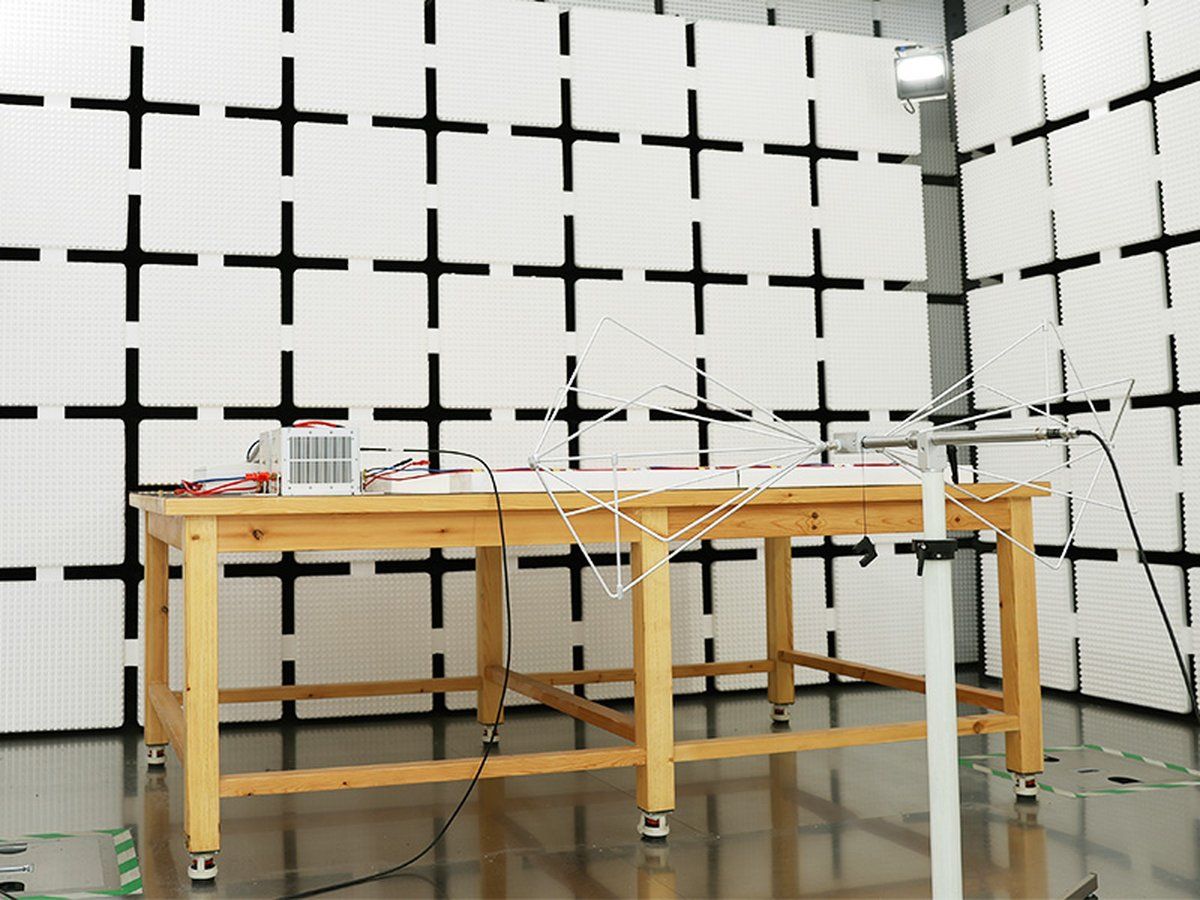
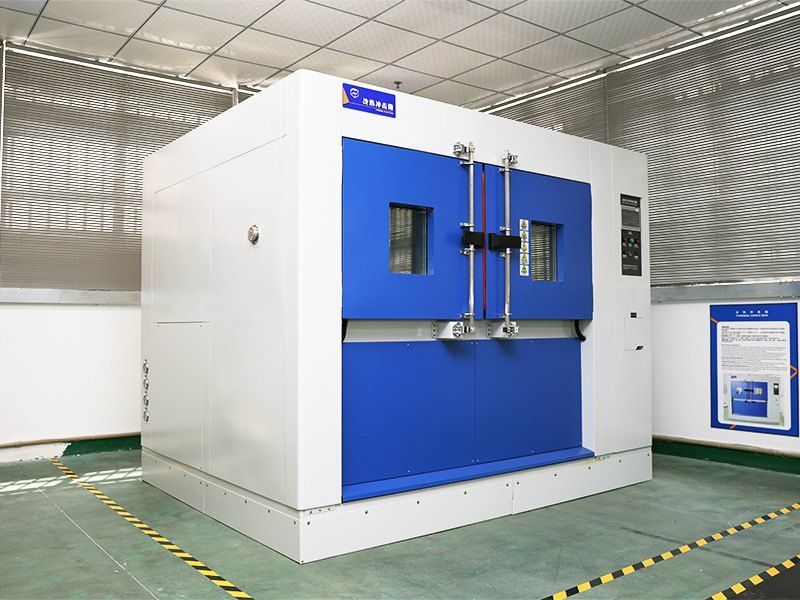
Flash controllers are switching loads, so the first thing a beacon can do wrong on a modern vehicle is interfere with the radio, telematics or a CAN bus. Every beacon design is measured for radiated emissions in our EMC chamber to CISPR 25 before it is released. The housing then goes through the vibration table to the profile of the vehicle it is meant for, and through thermal shock cycling between -40°C and 65°C (-40°F and 149°F) so that the lens, seal and potting move together instead of against each other. The sealed models are verified to IP69K, which covers pressure washing at close range and high temperature.
Test reports and lighting documentation are available on request with any quotation.
Frequently asked questions
Is it legal to put an amber beacon on my truck?
In most states, yes, for a work vehicle that needs to warn traffic of a hazard, slow movement or a wide load. Two conditions usually apply: the vehicle type must be one the state permits to carry amber, and the lamp may only be switched on while the hazard exists. Check the vehicle code of the state where the truck is registered before ordering. Alternately flashing headlamps are a separate question, covered in wig wag lights.
What is the difference between Class 1 and Class 2 warning lights?
Both are brightness tiers defined in the SAE warning-light standards. Class 1 is the highest output and is intended for vehicles that demand right of way or warn of an emergency. Class 2 is intended for utility, maintenance and service vehicles that need to signal their presence on or beside the road. The ratio is roughly four to one in intensity.
Do forklifts need an amber beacon?
No federal rule requires one. OSHA 1910.178 does not specify warning lamps on powered industrial trucks. Indoors, the common choice is a floor-projection blue spot or red zone light. Outdoors and on docks, a small amber beacon on the overhead guard is the usual site requirement, and the moment the truck crosses a public road the state's amber rules apply.
Can one beacon cover 12 V, 24 V and 48 V vehicles?
A 9–32 V DC beacon covers 12 V and 24 V fleets with one part number. Electric forklifts at 48 V, 60 V or 80 V need a wider-range driver, which is why we build 10–48 V, 10–60 V and 10–110 V DC versions of the same housing. Specify the voltage range on the order rather than the nominal system voltage.
Specify the color first, then the class, then the vehicle
Get the color right and the rest of the specification is mechanical: amber for work vehicles, red and blue left to the vehicles authorized to carry them, green and white confirmed state by state. Add the class for where the vehicle works and the form for where the lamp mounts, and the spec line writes itself.
Our LED beacon and warning light range covers the forklift, tractor, John Deere, municipal and construction cases in the table above, in 9–32 V DC as standard and 10–48 V, 10–60 V and 10–110 V DC for electric trucks. Minimum order is 60 pieces, production takes 15–25 working days, and samples of 1–5 pieces ship first. Send us the vehicle list and the state, and we will return a spec line and a quotation for each.