


Wig wag lights make a vehicle's two headlamps flash one after the other, left, right, left, right. The pattern is hard to miss, which is why police cars, fire apparatus and ambulances use it. It is also why most traffic codes keep it for them.
This guide covers what a wig wag system is, how the flasher inside it works, what the federal rules and two state codes actually say, and what a service truck, pilot car or municipal vehicle can use instead to get the same alternating signal legally.
What wig wag lights are
"Wig wag" describes the motion: a signal that swings from one side to the other. On a road vehicle it means the left and right headlamps flash alternately, usually on high beam. The same name is used for the swinging arm signals at old railroad crossings and for alternating landing lights on aircraft, which is why search results mix all three.
On an emergency vehicle the wig wag adds a flashing signal at headlamp height. It works alongside the roof light bar, not instead of it.
How a wig wag flasher works
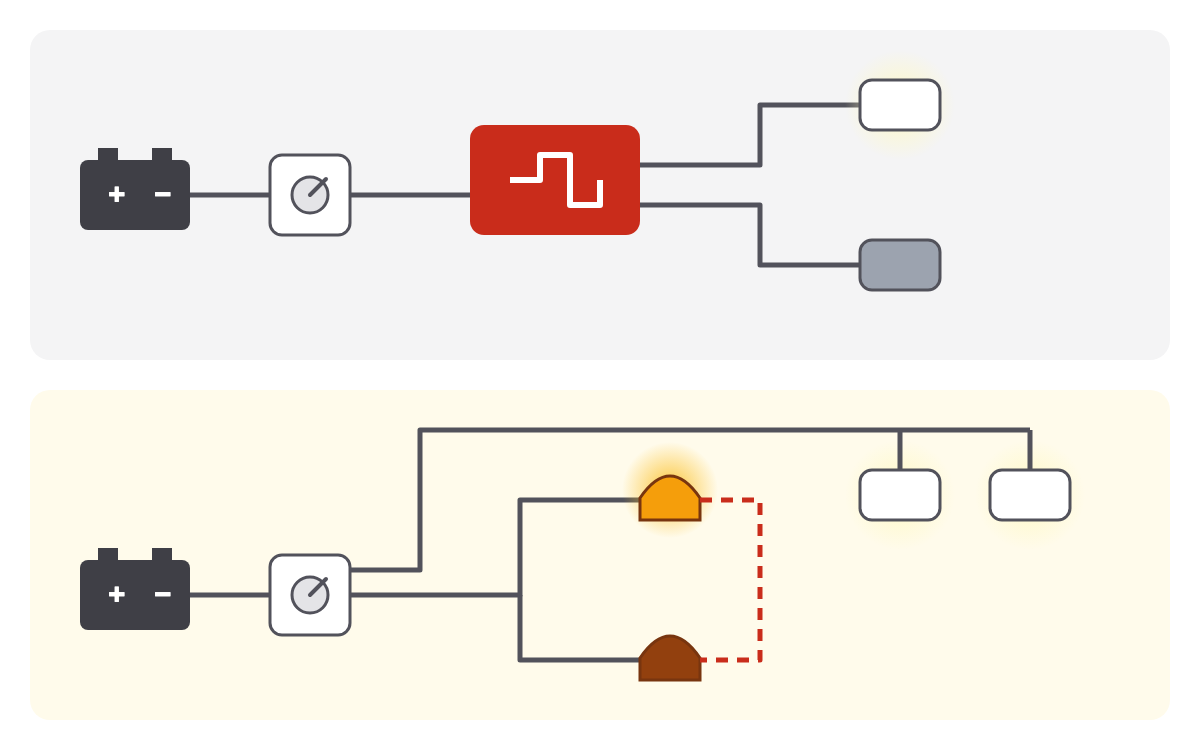
The flasher sits between the headlamp switch and the lamps. When it is armed, it cuts power to one headlamp while feeding the other, then swaps, at a fixed rate or in a selectable pattern. When it is off, the headlamps work normally.
Three forms are on the market.
| Form | How it connects | What to check | Typical use |
|---|---|---|---|
| Hard-wired control box | Spliced into the headlamp feeds, with its own switch or trigger wire | Rated current per channel, 12 V or 24 V supply, what happens if the module fails (the headlamps must come back on) | Emergency fleet upfit |
| Plug-in module | Fits between the headlamp and its connector | Connector type, LED compatibility, heat inside the headlamp housing | Single-vehicle retrofit |
| Lamps with built-in alternating flash | Two warning lamps joined by a sync wire, no change to the headlamps | Sync between the pair, flash pattern, colour allowed for the vehicle | Work trucks, pilot cars, municipal vehicles |
The first two change how the headlamps behave. The third leaves the headlamps alone and puts the alternating signal in separate warning lamps, which is the difference that matters for the law.
Are wig wag lights legal?
For headlamps, the short answer is: on authorized emergency vehicles, yes; on other vehicles, generally no. Here is what the texts say.
| Rule | What it says about flashing headlamps |
|---|---|
| FMVSS 108, Table I-a (US federal, vehicle equipment) | Headlamps are "steady burning, except that may be flashed for signaling purposes". There is no separate provision for a continuous left-right wig wag. |
| 49 CFR 393.24(a) (US federal, commercial motor vehicles) | Headlamps shall "be steady-burning". |
| California Vehicle Code 25252.5 | "Every authorized emergency vehicle" may have a system that flashes the upper-beam headlamps alternately, used only while operating as an emergency vehicle. |
| Texas Transportation Code 547.305(d) | Alternately flashing lighting equipment only on school buses, authorized emergency vehicles, church buses and tow trucks as defined. An escort flag vehicle may have alternating or flashing blue and amber lights, not flashing headlamps. |
| UK, Road Vehicles Lighting Regulations 1989, reg. 13 | Automatic headlamp flashing is limited to emergency vehicles. |
| New South Wales, Australia | Flashing headlamps are limited to emergency vehicles and school buses. |
Other states write the rule differently, and a few leave room for argument. Check the vehicle code of every state the vehicle will operate in before fitting a headlamp flasher, and do not treat a product being on sale as proof that it is legal to use.
Wig wag with LED headlights
Many older flashers were built around the current of a halogen bulb. An LED headlamp draws a fraction of that, and it has its own driver electronics between the supply and the LEDs. Two things follow:
A flasher that senses load current may flash too fast, or not at all, with LED lamps. Use one rated for LED loads, or one with no minimum load.
Switching an LED headlamp on and off repeatedly is switching its driver, not a filament. Ask the headlamp maker whether flashing is within the driver's design before wiring a flasher to it.
The legal option for work trucks: amber warning lamps that alternate
A service truck, pilot car or highway maintenance vehicle usually needs the same thing an emergency vehicle gets from a wig wag: a flashing signal at driver eye level that says "slow down, work ahead". The legal way to get it is a pair of amber warning lamps that alternate or flash together, with the headlamps left steady.
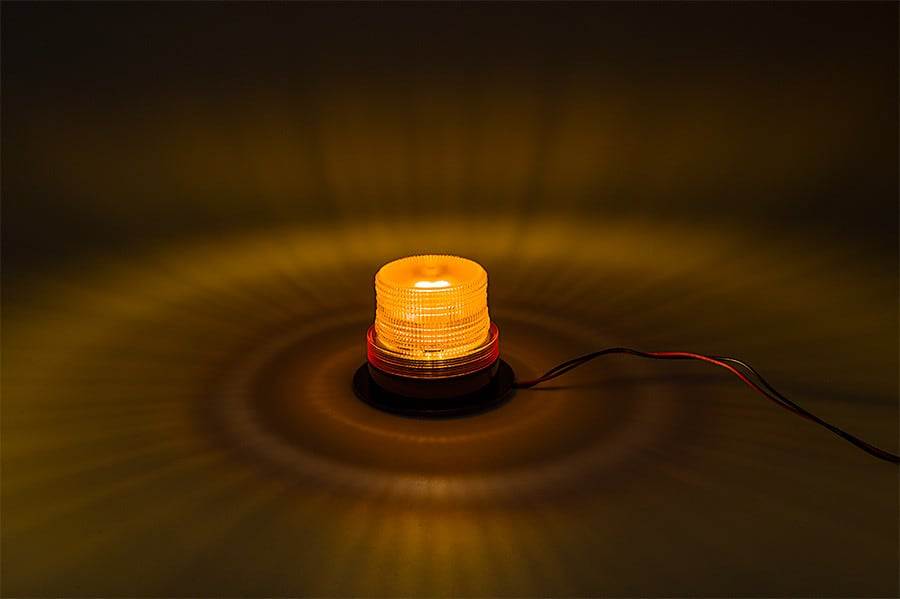
The federal commercial vehicle rules allow this. 49 CFR 393.25(e) requires exterior lamps to be steady-burning, with exceptions that include amber warning lamps on tow trucks and vehicles carrying oversized loads, and warning lamps on emergency and service vehicles authorized by state or local authorities. The same paragraph requires amber warning lamps to meet SAE J845 and amber flashing warning lamps to meet SAE J595. Which colours each vehicle may show is set by the state, and we cover that colour by colour in beacon light colors. In New South Wales, public utility vehicles such as street sweepers and garbage trucks, tow trucks and escort vehicles for oversize loads may fit amber flashing lights without approval from Transport for NSW, mounted on top of the vehicle and visible from at least 200 metres.
One point matters to body builders and dealers in the US. In a letter of 13 December 2024 to two trailer and equipment associations, NHTSA said that a manufacturer, distributor, dealer, rental company or repair business that installs warning lamps which impair the required lighting would violate the "make inoperative" provision of the Safety Act, and that this does not apply to the vehicle's owner. The letter states that it does not have the force and effect of law, and industry groups have asked for it to be revised. If you install warning lamps at the factory or the dealership, have your compliance team read the letter and confirm the position for your programme. The other lighting questions a body builder owns are covered in work truck lights: five problems the body builder owns.
What to specify for an OEM programme
If you are building alternating warning lamps into a vehicle programme, the drawing should settle these points before the first sample:
Signal: alternating pair, synchronised pair, or both selectable; flash pattern and rate set to the market you ship to.
Colour: amber for work and service vehicles; other colours only where the vehicle is authorized for them.
Supply: 12 V or 24 V; our warning lamps run on 9–32 V DC, with 10–48 V, 10–60 V and 10–110 V DC versions for forklifts and electric machines.
Sync: how the two lamps are linked (sync wire or controller) and what each lamp does if the link is lost.
Mounting and connector: to your bracket drawing and your harness.
Documents: the SAE standard and class your customer's specification asks for, and the test evidence you need with it.
If the programme also needs a headlamp flasher for authorized emergency vehicles, size each output channel to the headlamp it switches, with margin for inrush. A 60 W halogen high beam draws about 5 A at 12 V and 2.5 A at 24 V. An LED headlamp draws less: the wattage we list is the nominal LED power and a lamp typically draws about 80% of it, so a 40 W LED headlamp takes roughly 32 W, about 2.7 A at 12 V.
We build alternating and synchronised flashing into our warning lamps, with the flash pattern and rate set to the market you ship to, and we supply headlamp alternating flash control modules for 12 V and 24 V vehicles in authorized emergency vehicle OEM programmes. Send the drawing and the markets the vehicle ships to, and we will come back with a lamp and controller proposal. For the full range of beacons and warning lamps, see LED beacon and warning lights; for how the lamps sit on a service body, see work truck and service body lighting.
Frequently asked questions
Are wig wag lights legal on a work truck?
Flashing headlamps generally are not. California allows alternating headlamps only on authorized emergency vehicles, Texas limits alternately flashing lighting to authorized emergency vehicles, school buses, church buses and tow trucks, and federal rules require commercial vehicle headlamps to be steady-burning. A work truck gets the same alternating signal legally from a pair of amber warning lamps, where the state authorizes them.
Why are they called wig wag lights?
The name describes the motion of a signal swinging from side to side. The same word is used for railroad crossing signals with a swinging arm and for alternating aircraft landing lights.
Do LED lights need a special flasher?
Often, yes. A flasher designed around the current of a halogen bulb may flash too fast or not work with the lower current of an LED lamp. Use a flasher rated for LED loads, or one with no minimum load.
Can a pilot car or escort vehicle use wig wag headlights?
Texas allows an escort flag vehicle alternating or flashing blue and amber lights, and New South Wales lists escort vehicles for oversize loads among those that may fit amber flashing lights. Neither provision covers flashing headlamps. Check the code of each state on the route.