
LED Work Lights for Construction & Earthmoving
Work lights, beacons and direct-fit headlights for excavator, loader and compact-equipment OEM programmes: tested to your vibration profile, IP69K, polycarbonate lens, 9–32 V DC, with reports and ECE R10 documents per model.

A work lamp on an excavator meets the rock, the rain and the pressure washer before any other part on the machine does, and a fleet notices it only when the boom lamp goes dark halfway through a night shift. This page is written for the people who specify that lamp: OEM engineering and purchasing teams at excavator, loader, dozer and compact-equipment builders, attachment manufacturers and rental fleets.
The short version: one 9–32 V DC lamp family built for the boom, the counterweight and the wash bay, tested on our own vibration table to the profile on your drawing, with a report and the approval documents issued per model.
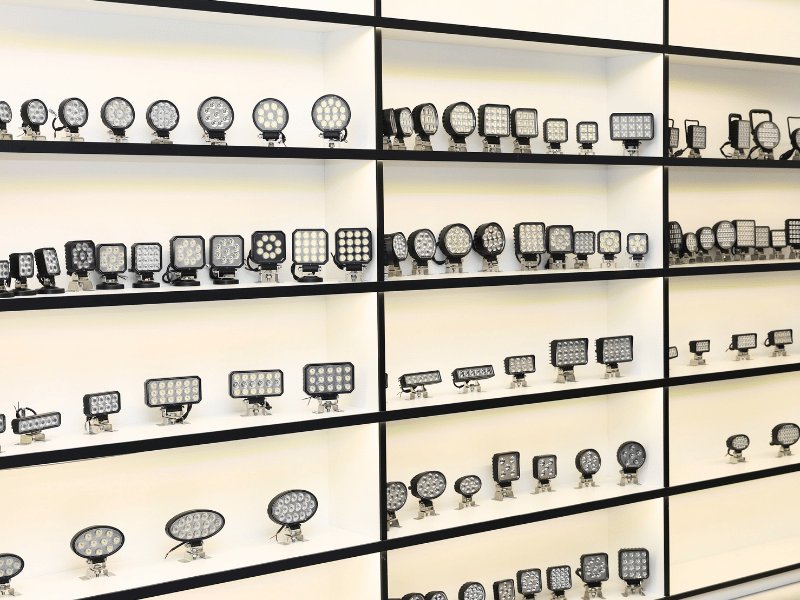
Common Challenges in Construction & Earthmoving
The boom lamp goes dark on a night shift
Track drive and bucket impact shake an unsealed lamp apart long before its LEDs wear out, and the machine loses its most important light first.
Rock, rebar and the pressure washer
Flying debris cracks lenses and the daily wash bay finds any housing that is not sealed and potted.
Two voltages, two part numbers
Mixed 12 V and 24 V fleets double the spare-part lines when each lamp is built for one electrical system.
What earthmoving OEMs ask about first
In the order the questions usually arrive: will it survive the machine, will it survive the wash bay, will it survive a rock, does one part cover 12 V and 24 V, and how much light does each position need. Certification comes last, as a documentation line. The table follows that order and shows where we stand on each line today. Where a figure is model-specific we say so rather than quote a range.
Send the spec sheet and we mark our status against every line
Vibration profile, IP rating, supply voltage, connector, certifications: you get a line-by-line answer, and a test report per model where one exists.
Get RecommendationsReply within 24 hours
| Requirement | What the specification usually calls for | Tough Lighting status |
|---|---|---|
| Vibration and shock | Broadband random profile from track drive and bucket impact, set by the OEM | Run on our in-house vibration table to your profile; report per model on request |
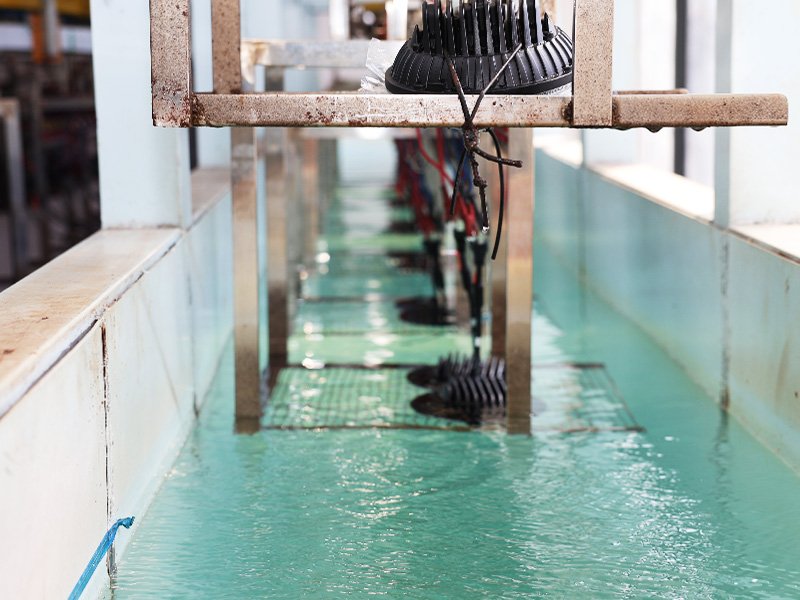
| Ingress and washdown | IP67 to IP69 to IEC 60529, or IP69K to ISO 20653; daily high-pressure washing | IP69K housings with potted drivers across the construction range |
| Rock, rebar and the lens | Lens that survives flying debris; bracket that holds after impact | Impact-resistant polycarbonate lens and stainless steel brackets; lens guards and reinforced brackets to your drawing |
| Supply voltage | 12 V and 24 V systems on one part number | 9–32 V DC standard across work lights; 10–48, 10–60 and 10–110 V DC options on beacons and safety lights |
| Output and beam per position | Flood, spot and cut-off optics matched to each lamp position; no glare to ground workers | Flood and spot across the range; cut-off optics for counterweight and rear positions developed to your specification |
| Operating temperature and environment | Cold start, cab-roof heat, salt and dust | Thermal shock, salt spray and dust chambers in house; operating range confirmed per model |
| Connector and mounting | Deutsch DT family or flying lead to the harness drawing; bracket to the mounting face | Connector, cable length and bracket built to your specification |
| Warranty and service life | 2 to 5 years; no bulb to replace | 5-year warranty on the work light range; sealed solid-state build with no bulb to shatter |
| Type approval and documentation | ECE R10 (E-Mark), CISPR 25 class, CE | Four work lamp models hold ECE R10 approval (40 W, 50 W, 60 W and 90 W round); CISPR 25 class confirmed per model; CE and E-Mark documentation on request |
Lamp positions on an excavator or wheel loader
An earthmoving machine carries five to nine lamps in five or six positions, and each position asks for a different output and beam. The table pairs each position with the models most often specified there. All are 9–32 V DC with brackets available.
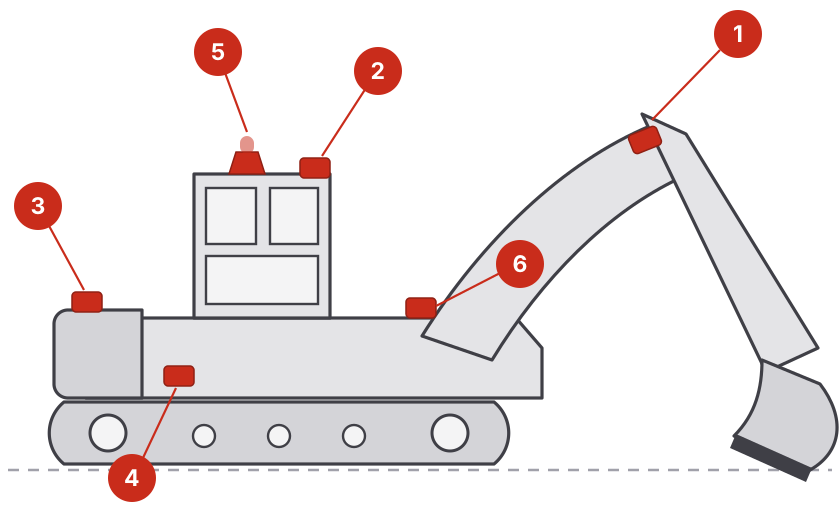
| Position | Job | Beam and output band | Example models |
|---|---|---|---|
| Boom or stick | Light that travels with the bucket | Flood or spot, 40–90 W | 3inch Round 40W LED Work Lamp (ECE R10)5inch Round 90W LED Work Lamp (ECE R10) |
| Cab roof, front | Dig face and load area | Flood, 50–144 W | 4.8inch 50W Heavy Duty LED Work Lights4.8inch 144W Square OSRAM LED Work Lights |
| Cab roof, rear, and counterweight | Swing zone and reversing path, aimed away from ground workers | Flood, 30–64 W | 4.7inch 30W Heavy Duty LED Work Lights4.25inch 64W Square LED Work Lights |
| Side and track | Trench edge and step | Flood, 12–27 W | 3inch 12W Square LED Work Lights3.6inch 27W Round LED Work Lights |
| Cab roof, warning | Site visibility | Amber strobe beacon, IP69K | 3-3/4″ Amber LED Strobe Light Beacon5-1/4″ Amber LED Strobe Light Beacon |
| Whole-area lighting on large machines | Floodlighting an entire cut | Flood or spot, 290–580 W | 12.5inch 290W Heavy Duty LED Work Lights13inch 580W Heavy Duty LED Work Lights |
Recommended Products for Construction & Earthmoving

3inch Round 40W LED Work Lamp
Part Number: YW-0701-40
3 inch Round High Powered LED light. 4 x 10 Watt high power Cool White LEDs. 9~32VDC operating voltage range, IP69K waterproof light. Black painted aluminum housing with integral heatsink and polycarbonate lens. Available in narrow 30 degree or medium flood 60 degree beam pattern. Stainless steel adjustable stud mounting bracket and optional mounting tabs included. 83x111x60mm(WxHxD) 9-32V DC Flood Beam Pattern 40W 3200 Lumens CISPR 25 CLASS 4

5inch Round 90W LED Work Lamp
Part Number: YW-0701-90
5 inch Round High Powered LED light. 9 x 10 Watt high power Cool White LEDs. 9~32VDC operating voltage range, IP69K waterproof light. Black painted aluminum housing with integral heatsink and polycarbonate lens. Available in narrow 30 degree or medium flood 60 degree beam pattern. Stainless steel adjustable stud mounting bracket and optional mounting tabs included. 127x158x80mm(WxHxD) 9-32V DC Flood Beam Pattern 90W 7200 Lumens CISPR 25 CLASS 4

4.8inch 144W Square OSRAM LED Work Lights
Part Number: YW-0809-144
4.8″ Square 144W led work light uses the Osram 1 watt cool white LEDs, IP69K waterproof, 9-32VDC operating voltage range, 100 degree flood beam, 304 Stainless steel adjustable mounting brackets. Size: 4.8inch Beam Pattern: Flood LED Type: 144pcs x 1W Osram LEDs Power: 144Watts Brightness: 11520 Lumens Input Voltage: 9-32V DC CISPR 25 Class 4

4.8inch 50W Heavy Duty LED Work Lights
Part Number: YW-0407-50
4.8inch 50W OSRAM LED work lights use the high powered 10Watt OSRAM LEDs, 9-32VDC operating voltage range, IP69K waterproof light. Black painted aluminum housing with integral heatsink and polycarbonate lens. Available in narrow 30 degree or medium flood 60 degree beam pattern. Stainless steel adjustable stud mounting bracket and optional mounting tabs included. 121x96x76mm(WxHxD) 9-32V DC Flood/Spot Beam Pattern 50W 4000 Lumens CISPR 25 CLASS 4

4.25inch 64W Square LED Work Lights
Part Number: YW-0806-4-64
4.25inch Square High Powered LED light. 16 x 4 Watt high power Cool White LEDs. 9~32VDC operating voltage range, IP69K waterproof light. Black painted aluminum housing with integral heatsink and polycarbonate lens. Available in narrow 30 degree or medium flood 60 degree beam pattern. Stainless steel adjustable stud mounting bracket and optional mounting tabs included. Size: 4.25inch Beam Pattern: Flood LED Type: 9pcs x 4W Osram LEDs Power: 64Watts Brightness: 6400 Lumens Input Voltage: 9-32V DC

4.7inch 30W Heavy Duty LED Work Lights
Part Number: YW-0607-30
4.7inch 30W OSRAM LED work lights use the high powered 10Watt OSRAM LEDs, 9-32VDC operating voltage range, IP69K waterproof light. Black painted aluminum housing with integral heatsink and polycarbonate lens. Available in narrow 30 degree or medium flood 60 degree beam pattern. Stainless steel adjustable stud mounting bracket and optional mounting tabs included. Built-in DT Connector EMC CISPR25 Class4 ADC12 aluminum alloy housing 304 stainless steel bracket

3.6inch 27W Round LED Work Lights
Part Number: YW-0706-3-36
3.6inch Round High Powered LED light. 9 x 3 Watt high power Cool White LEDs. 9~32VDC operating voltage range, IP69K waterproof light. Black painted aluminum housing with integral heatsink and polycarbonate lens. Available in narrow 30 degree or medium flood 60 degree beam pattern. Stainless steel adjustable stud mounting bracket and optional mounting tabs included. Size: 3.6inch Beam Pattern: Flood/Spot Beam LED Type: 9pcs x 3W CREE LEDs Power: 27Watts Brightness: 2160 Lumens Input Voltage: 9-32V DC

3inch 12W Square LED Work Lights
Part Number: YW-3011
Designed for marine and truck, this 3″ square 12W LED Work Light uses 4pcs high intensity 3W cool white chips, IP69K waterproof and 9~32VDC operating voltage range. 30 degree spot and 60 degree flood are available, Stainless steel adjustable mounting brackets. Size: 2.8inch Beam Pattern: Flood/Spot LED Type: 4pcs x 3W CREE LEDs Power: 12 Watts Brightness: 960 Lumens Input Voltage: 9-32V DC

3-3/4″ Amber LED Strobe Light Beacon
Part Number: BE2010A
This amber LED strobe beacon fits forklifts, snow plows, utility carts, tow trucks and other industrial vehicles. 360° visibility with a double-tap flash pattern at 80 flashes per minute. Polycarbonate lens and ABS base withstand impact and wet conditions; sealed to IP69K. Runs on 9-32V DC as standard, with 10-48V, 10-60V and 10-110V DC versions for electric forklifts. Installation hardware included. Size: 5″ x 3.7″ (W x H) · LEDs: 5 x 1W · Power: 5W · Colour: amber (orange optional) · Magnet base and warning buzzer optional

5-1/4″ Amber LED Strobe Light Beacon
Part Number: BE2010B
This amber LED strobe beacon fits forklifts, snow plows, utility carts, tow trucks and other industrial vehicles. 360° visibility with a single-tap flash pattern at 80 flashes per minute, with an internal flash controller (no external ballast) and 75″ power leads. Polycarbonate lens and ABS base withstand impact and wet conditions; sealed to IP69K. Runs on 9-32V DC as standard, with 10-48V, 10-60V and 10-110V DC versions for electric forklifts. Installation hardware included. Size: 4″ x 5.2″ (W x H) · LEDs: 5 x 1W + 30 x 0.3W · Power: 9W · Colour: amber (orange optional) · Magnet base and warning buzzer optional

12.5inch 290W Heavy Duty LED Work Lights
Part Number: YW-0607-290
12.5inch 290W OSRAM LED work lights use the high powered 10Watt OSRAM LEDs, 9-32VDC operating voltage range, IP69K waterproof light. Black painted aluminum housing with integral heatsink and polycarbonate lens. Available in narrow 30 degree or medium flood 60 degree beam pattern. Stainless steel adjustable stud mounting bracket and optional mounting tabs included. Built-in DT Connector EMC CISPR25 Class4 ADC12 aluminum alloy housing 304 stainless steel bracket

13inch 580W Heavy Duty LED Work Lights
Part Number: YW-0607-580
13inch 580W OSRAM LED work lights use the high powered 10Watt OSRAM LEDs, 9-32VDC operating voltage range, IP69K waterproof light. Black painted aluminum housing with integral heatsink and polycarbonate lens. Available in narrow 30 degree or medium flood 60 degree beam pattern. Stainless steel adjustable stud mounting bracket and optional mounting tabs included. Built-in DT Connector EMC CISPR25 Class4 ADC12 aluminum alloy housing 304 stainless steel bracket
Not seeing your lamp position or output band? Send the drawing, or a photo and the machine model, and we shortlist models for each position.
Get RecommendationsHow an OEM programme runs
There are two routes, depending on whether your drawing calls for a catalogue lamp or a new part.
Catalogue and private label. Any of the 300-plus lights in the catalogue can be supplied under your brand from 60 pieces per model, with your logo, packaging, connector and cable length. Samples ship first, typically within 1 to 5 days, and production runs in 15 to 25 working days.
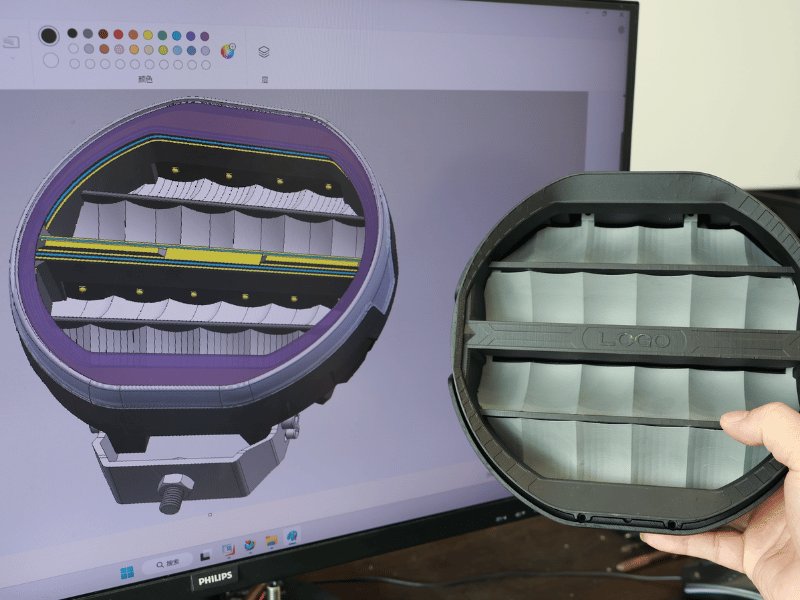
Custom development. Where the mounting position, beam or housing is new, we develop the lamp to your requirement: design in 7 to 15 days, a 3D-printed prototype in 5 to 7 working days, production tooling in 30 to 45 days and pre-production samples in 7 to 10 working days, which puts the first bulk shipment at four to five months from design start. Tooling can be shared and amortised into the unit price or funded by you for a lower unit cost, and products developed for you can be covered by an exclusivity agreement. The full process is on our custom development page.
Send the drawing, or a photo and the machine model, and our engineers will come back within 24 hours with a feasibility assessment and next steps.
Testing we do in house
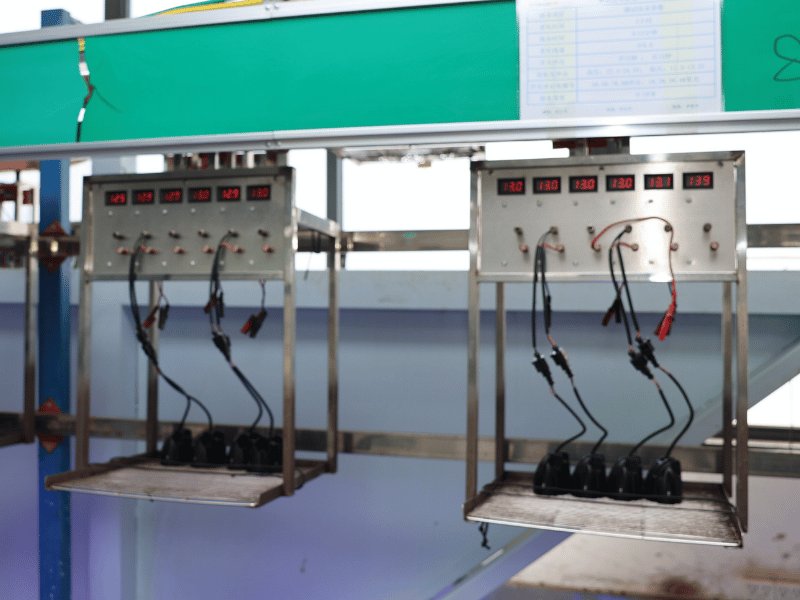
The equipment behind the status table sits in our own factory, which is what lets us answer a specification line with a report rather than a promise.
Vibration table for broadband random profiles, run to the profile on your drawing. This is the first line most earthmoving specifications open with, and the first report we issue.
Thermal shock chamber, salt spray chamber and dust chamber for the environmental lines of the specification.
Photometric darkroom for beam pattern and intensity, so the flood, spot or cut-off on the drawing is measured rather than assumed.
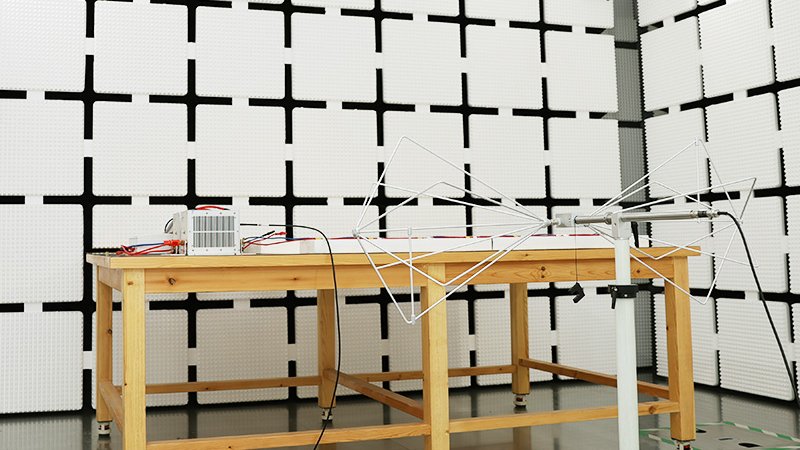
EMC anechoic chamber for radiated emissions to CISPR 25, the test behind the class we quote per model in the documentation pack.
Reports from these tests are issued per model on request. Where a line calls for third-party type approval, such as ECE R10, we hold the approval for four round work lamp models (40 W, 50 W, 60 W and 90 W) and can route further models through the same laboratory.
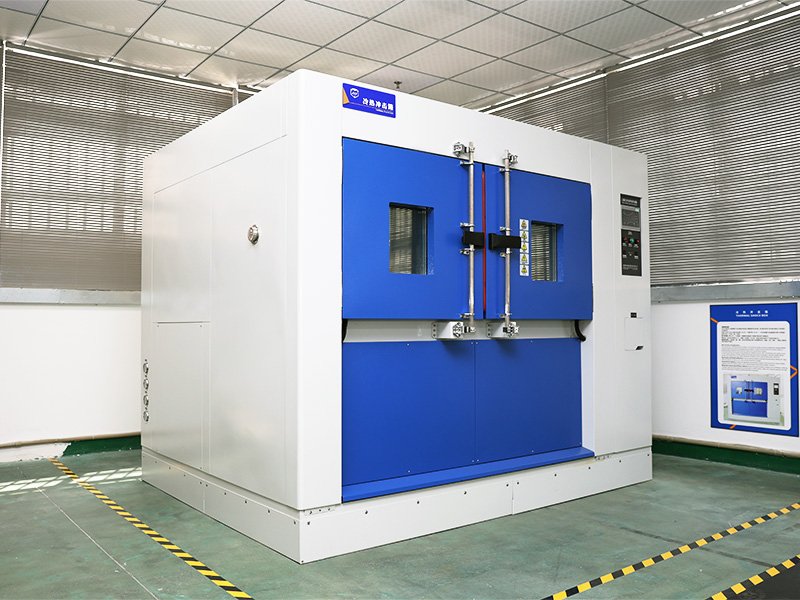
Need the test report for a model? Existing reports are sent on request; where none exists yet, we can run the test to the profile on your drawing.
Request test reportsCameras and controllers on the same machine
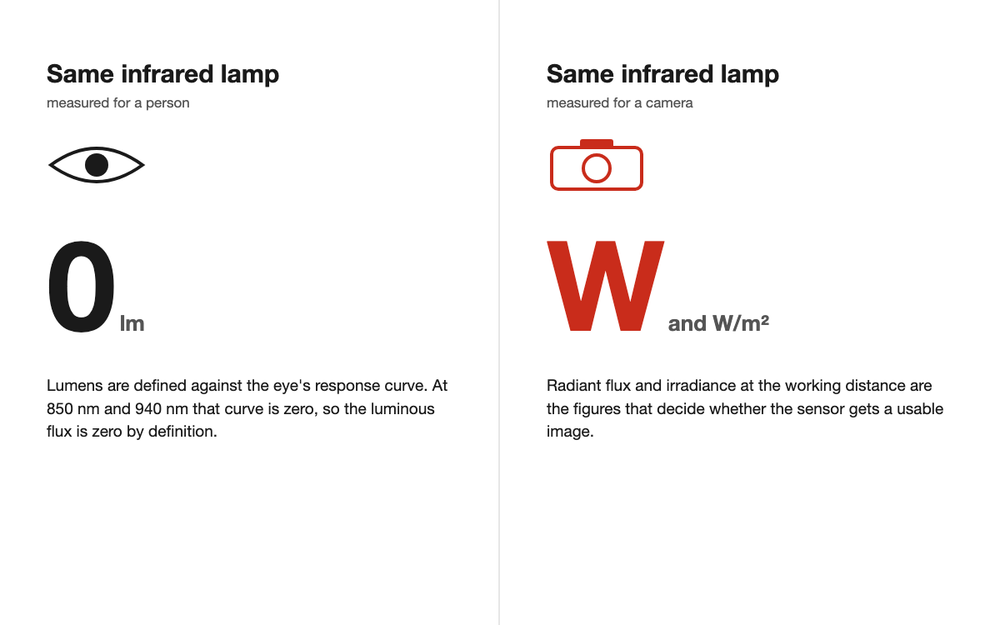
Earthmoving machines increasingly carry cameras, proximity sensors and telematics, and a lamp that passes EMC on the bench can still disturb the controller mounted beside it on the machine. Our guides on why E-marked lamps still interfere with radios and GPS and infrared lights for machine cameras cover the two questions OEM engineers integrating lighting with sensor packages ask us most.
For the figures that make two lamps comparable on a specification sheet, see LED lights for heavy equipment: which specs are comparable. The full construction range is in heavy duty work lights and cab-roof beacons are in LED beacon and warning lights.
Want to See the Full Range?
330+ LED lights with full specifications, organised by category, sent straight to your inbox.
Frequently Asked Questions
What vibration test report can you provide?
We run your vibration profile on our in-house table and issue the report per model, together with thermal shock, salt spray and dust results where the specification calls for them. We do not quote one figure for the whole range, because the profile on your drawing is the one that matters.
Can one part number cover our 12 V and 24 V machines?
Yes. The work light range runs on 9–32 V DC, so one part number serves 12 V compact machines and 24 V excavators without a converter. Beacons and safety lights are also offered in 10–48, 10–60 and 10–110 V DC versions.
What lens and guard options do you offer for rock and rebar?
The lenses are impact-resistant polycarbonate rather than glass, on stainless steel brackets. Lens guards and reinforced brackets are built to your drawing, and the sealed solid-state build has no bulb to shatter.
What is the minimum order and lead time for an OEM programme?
Catalogue and private-label lamps ship from 60 pieces per model in 15 to 25 working days, after samples that typically ship within 1 to 5 days. A custom-developed lamp reaches first bulk shipment about four to five months from design start, including tooling.
Can you build a lamp to our drawing?
Yes. We develop lamps to customer requirements from design through 3D-printed prototype to production tooling, and products developed for you can be covered by an exclusivity agreement. Send the drawing, or a photo and the machine model, for a feasibility assessment within 24 hours.
Which certifications and EMC class do your lamps carry?
Four round work lamp models hold ECE R10 approval: 40 W, 50 W, 60 W and 90 W. Because EMC performance varies by model, we confirm the CISPR 25 class and the documentation for each specific model rather than quoting one class across the range. CE and E-Mark documentation is available on request.
Talk to our engineering team
We'll match the right product to your exact equipment model and operating environment, free of charge.
Get a Free QuoteReply within 24 hours
Need LED Lights for Construction & Earthmoving?
Tell us your equipment model and operating environment and we'll recommend the right solution.