


Ask a supplier which LED light is best for a tractor and you will get a product. Ask someone who has run the same machine for ten seasons and you will get a question back: best for what?
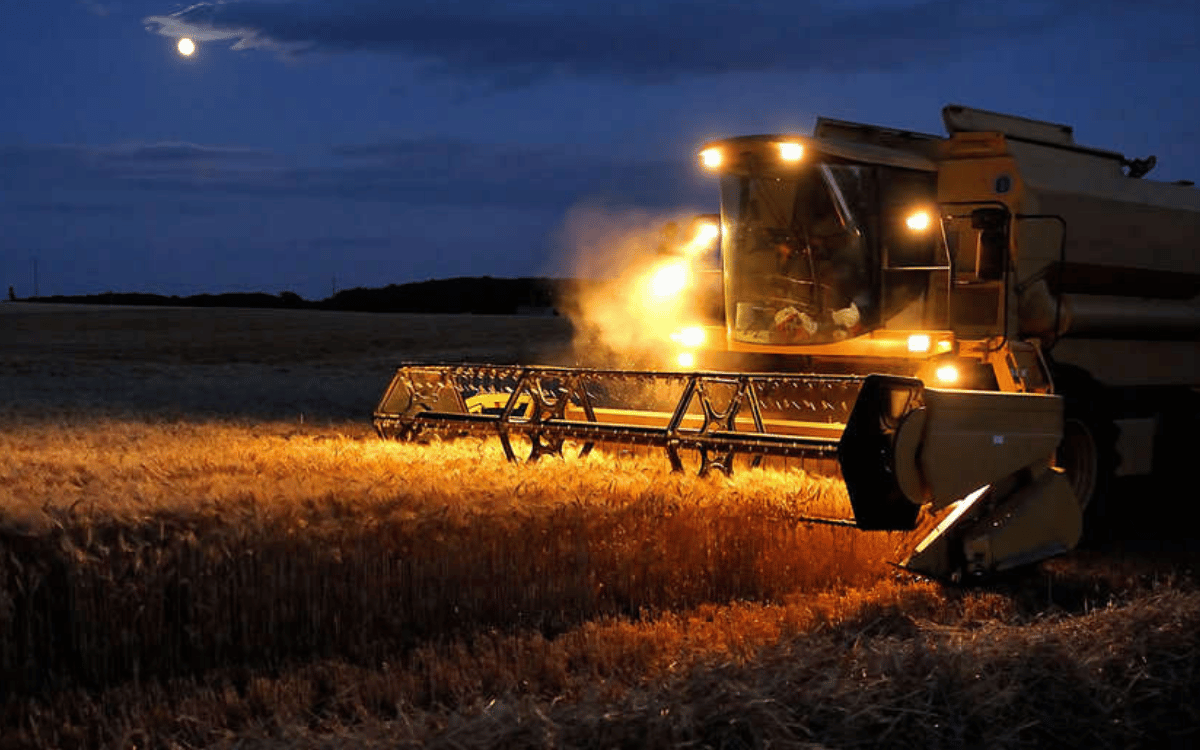
The search results show how often the question is asked. "What are the best LED lights for farm tractors", "what is the best LED light for a tractor" and "which LED lights are best for tractors" all turn up as People Also Ask entries on the same English-language result pages. They are one question, and it has no single answer, because a tractor set up for night work does not carry one work light. Nordic Lights, a Finnish lamp manufacturer, puts the number at eight to twelve for even coverage, and that matches what we see on the machines our lamps go onto.
The short answer: name the position first. Once you know where on the machine the lamp goes, what work it has to light and how far away that work is, and whether the tractor ever pulls onto a public road, the specification narrows to something you can actually discuss with a supplier.
Why the question has no answer as asked
The six positions on a tractor are not six copies of one requirement. Each one lights a different thing, needs a different beam, and destroys a lamp in its own particular way.
| Position | What it has to light | Beam | How a lamp dies here |
|---|---|---|---|
| Cab roof, front | The ground ahead and the headland turn | Flood, or a combination where one lamp has to reach as well | Heat. The roof is the hottest place on the machine and the lens starts the shift already warm |
| Cab roof, rear | The implement and the work behind it | Flood | Heat, plus dust drawn up behind the cab |
| Fender and cab corner | The wheel line, the hitch and the step | Flood, short range | Vibration and the pressure washer, both at close range |
| Front grille and headlights | Road transport and travelling between fields | Low and high beam, type-approved for the market in question | Stone impact and, on the road, the legal requirement that catches people out |
| Handrail, mirror and A-pillar | The coupling area and the near ground | Flood, low output | Knocks during coupling, and washing |
| Roof beacon | Everyone else, in daylight as much as at night | Amber, flashing | Vibration. It is also the one lamp that has to work when the others are off |
Pick any row and the answer to "which is best" changes completely. A 40 W flood is right on a fender and useless as a headland lamp. A long-reach combination lamp on a fender puts a hot spot on your own rear wheel.
The three questions that do have answers
Start with the position on the machine
The position sets the beam before anything else. Flood for anything close, a narrower beam for anything you need to see at the far end of the field, and a combination where one lamp has to do both. In our own tractor range the split reflects this: of the 187 lamps, 87 are flood, 41 are flood and spot combination, 17 are high and low beam headlights, and the remaining 42 are either uncategorised or have no beam recorded. Flood is the largest single group, because most positions on a tractor light something close to the machine, and that group also carries the amber and flashing lamps. Our beam patterns entry sets out what each pattern is actually specified as.
Then the work, and the distance it sits at
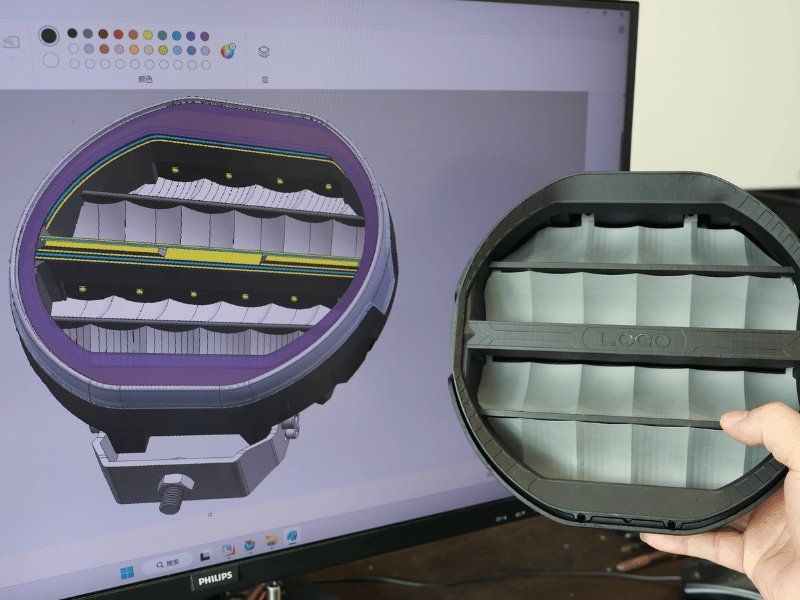
This is where most comparisons go wrong, because buyers compare lumens and the field cares about lux. Lumens are the total light a lamp emits in every direction. Lux is what lands on the ground at the distance you work at, and it falls away fast. Two lamps quoting the same lumens can land very different amounts of light at twenty metres, depending on the optic.
Our guide to what 3,000 lumens is actually worth on the ground works through the arithmetic. For choosing a tractor lamp the practical version is short: ask for lux at the distance you work at, and treat any lumen figure without a test report behind it as a starting point rather than a specification.
Last, whether the tractor goes on a public road
The moment it does, the rules change and they are not ours to set. Road lighting and marking on agricultural machinery is governed by national law, and by state or regional law where that applies, and a work lamp aimed forward is not a headlight no matter how bright it is. The amber flashers and the slow-moving vehicle emblem are a separate requirement again, and we cover what each one is for in the SMV triangle and the amber lamps. Machines that stay in the field have none of these constraints, which is exactly why the same question gets different answers on two farms.
What our own catalogue actually shows
Supplier pages tend to quote the best number in the range and leave the spread out. Here is the spread across all 187 lamps we list for tractors, taken from the product records rather than from a brochure.
| Specification line | What the 187 lamps show | What to do with it |
|---|---|---|
| Operating voltage | 173 of 187 are 9 to 32 V DC | One part number covers 12 V and 24 V machines. The remaining 14 are older records without the field filled in, so confirm those individually |
| Ingress protection | 148 IP69K, 12 IP67, 4 IP68, and 23 records where the field is not filled in | IP69K is the pressure washing grade, defined in ISO 20653 and not in the IEC 60529 code quoted beside it. It describes hot high-pressure washing, not immersion, so check which of the two your position actually needs |
| Lens material | 148 polycarbonate, 39 not recorded | Polycarbonate takes a stone strike that cracks glass. It also scratches, so lens guards matter on fender positions |
| Beam pattern | 87 flood, 41 flood and spot combination, 17 high and low beam, 42 either uncategorised or not recorded | Match to the position, not to the price. The flood group also carries the amber and flashing lamps, which are a different job again |
| Wattage | 7 W to 210 W, median 40 W | The median says where this category sits, not what any one position needs. The 90 W and above group is 24 lamps, mostly for large combines and roof positions |
| Catalogue lumens | 1,100 to 15,000, median 3,500 | Raw figures unless a report says otherwise. The two ends are not the same lamp, so do not read an efficiency trend into them. Ask for the LM-79 report, including the intensity distribution, before comparing figures between suppliers |
Two lines in that table deserve reading twice. The voltage line is the reason a mixed yard does not need two sets of spares: our multi-volt input entry explains what a 9 to 32 V DC front end does. The lumen line is the one to be sceptical about, including when the catalogue is ours. Where we hold a test report for a lamp, the data sheet and the report are available on request rather than summarised on a page.
The failure mode follows the position
Field failures are not random and they are not mostly about brightness. A lamp on a fender or a cab corner spends its life being shaken by a diesel engine and then hit with hot water at close range at the end of the day. A lamp on the cab roof spends its life hot. Those are two different engineering problems and they call for two different questions to the supplier.
For the shaken positions, ask how the electronics are held. A potted assembly, where the board and the LEDs are encapsulated in resin, has nothing left that can move; an unpotted board relies on its solder joints to survive every hour the engine runs. Ask for the vibration test and the profile it was run to, rather than a claim that the lamp is vibration resistant. We run broadband random profiles on our own table, to the profile on your drawing, under IEC 60068-2-64. A sinusoidal sweep is a different excitation, so figures from the two tests cannot be compared against each other.
For the hot positions, ask for the operating temperature range and what happens at the top of it. Output drops as the junction heats, and a lamp that quotes its lumens cold will not hold that figure on a roof in high summer.
For the washed positions, IP69K is the grade that describes the actual treatment: water at 80 degrees Celsius, 80 to 100 bar, from four angles. A rating that covers only immersion says nothing about the washer, and the reverse holds too, so name the accident you are protecting against rather than assuming one number covers both.
What to put on the order
Five lines, in this order, and most of the risk is gone before anything ships. The order matters because each line narrows the one below it.
| Step | The line to write | Why it comes here |
|---|---|---|
| 1 | The position on the machine, named | Everything below follows from it, including which test is the right one to ask for |
| 2 | The beam, and the distance the work sits at | Ask for lux at that distance rather than lumens, so the answer is comparable between suppliers |
| 3 | The input voltage, and whether the yard runs 12 V, 24 V or both | A 9 to 32 V DC lamp removes the question and halves the spares list |
| 4 | The test report that matches the failure mode for that position | Vibration profile for fenders and corners, temperature range for roof positions, IP69K to ISO 20653 wherever the machine is washed |
| 5 | The connector, confirmed against the machine | The one line most often assumed rather than checked, and the one that stops an otherwise correct lamp from going on |
Frequently asked questions
What are the best LED lights for farm tractors?
There is no single best lamp, because a tractor carries lamps in six positions that each need something different. The best lamp for a cab roof is a flood or combination sized for the heat at that position; the best lamp for a fender is a low-output flood built to survive vibration and pressure washing. Name the position first and the choice narrows to a handful.
What are the best 12 volt LED lights for tractors?
Buy a 9 to 32 V DC lamp rather than a 12 V one. The same lamp runs on a 12 V tractor and a 24 V tractor with no change to the lamp itself, which means one part number on the shelf instead of two. Size the wiring and the fuse for the voltage you actually run, because the same wattage draws twice the current at 12 V as it does at 24 V. 173 of the 187 tractor lamps we list take that input, and in the records we have confirmed there is no separate 12 V range to look for.
What is the downside of LED lights?
Two that belong to the technology, and one that belongs to the market. The lens face runs cooler than a halogen did, so on a snow or ice job it does not melt what lands on it, which is why heated lenses exist; the heat is still there, it has moved to the back of the lamp. They are switching electronics, so a poorly filtered lamp can interfere with a radio or a GPS receiver on the same machine. The third is not a property of LEDs at all: the cheap end of the market fails early because unpotted boards do not survive continuous vibration. None of those is a reason to go back to halogen, but all three are worth specifying around.
Does the shape of the lamp matter, round or square?
Only for fitting. Round lamps tend to suit existing holes on older machines and the classic PAR housings; square and rectangular lamps give a slightly wider mounting face on a flat bracket. Neither shape has an inherent optical advantage, so choose the one that bolts to what you have.
Start from the position, not from the product
If you want this run against your own machines, send the positions you need lit and the distance the work sits at with your enquiry, and we will come back with a lamp for each position rather than a single recommendation. Start from the LED tractor lights range, which covers the six positions above.